The new vocabulary 

The New Vocabulary


They sold the frightened public softer names,
Then called the silence “safety for us all,”
While profit wore a white and blameless face,
And conscience stood outside the marble hall.
They changed the language, polished every chain,
Called force “a kindness,” doubt “a public threat,”
Called fear “the science,” questions “cruelty,”
And asked us to forget what we had met.
The greater good became a rubber stamp,
Pressed hard upon the forehead of the poor;
The wealthy watched the numbers climb at noon,
Then locked the moral argument next door.
No decent soul should hunger for disease,
No child should be reduced to someone’s pawn;
But power has a way of wearing scrubs
And speaking gently while the locks go on.
It is not wisdom to obey a lie,
Nor courage to pretend that harm is love;
A nation is not healed when honest speech
Is swept beneath a well-rehearsed “enough.”
They said a question was a dangerous thing,
As though the mind were poison when awake;
But every tyrant fears the common man
Who sees the mask beneath the hand they shake.
The vaccine myths were weapons, too—
Microchips, sterility, cancer, certain doom;
A frightened lie can fill a vacant room
And turn suspicion into living tomb.
Yet facts are not the servants of the state,
Nor are they toys for merchants selling rage;
Truth must be held against both kinds of fraud—
The liar’s pulpit and the censor’s cage.
For data can be twisted into dread,
And numbers can be made to sound like prayer;
A report of harm is not proof of cause,
But neither should compassion vanish there.
A body is not property of kings,
Nor property of markets, flags, or schemes;
No government should learn to own the breath
Of people it has promised liberty and dreams.
Beware the man who says, “Trust me alone,”
Then builds his tower from your grief and need;
He does not seek to serve the public good—
He seeks the soil in which his power can seed.
Beware the merchant selling sacred fear,
Who turns each neighbor into enemy;
He fattens on the panic of the crowd
And calls his private hunger “liberty.”
The truth is not a party’s purchased hymn,
Nor found where slogans drown the human heart;
It asks us to be careful with the weak,
And brave enough to pull deceit apart.
We need no gods in offices of state,
No saints whose errors may not be confessed;
We need the humble courage to say, “Wait—
Show all the facts, and let the people test.”
For language is the doorway to the soul:
Name chains as chains before they tighten fast;
Name greed as greed, though draped in public good,
And keep the record of the wounded past.
The crowd is not a beast for rulers’ use,
Nor clay to shape beneath an expert hand;
It is a million beating human hearts
Who still deserve the truth to understand.
So let the warning ring through every street:
When power claims your conscience as its own,
Ask who is richer, who is made afraid,
And who is left to suffer all alone.
We change the world not by a louder lie,
But by refusing every gilded cage;
By loving truth more deeply than our tribe,
And leaving fear no throne upon the stage.
Let mercy guide us, reason keep us clear,
Let neither profit nor panic take the helm;
For free men lose themselves when they forget
That truth—not power—ought to rule the realm.

DCG

What Happened to the Hippocratic Oath
The original, and what replaced it
Almost nobody swears the Hippocratic Oath anymore — not the real one. The text most physicians recite at graduation was written in 1964 by a pharmacology professor in Boston, and the international standard that sits alongside it was drafted in 1948 by doctors reckoning with what their colleagues had just done in Nazi Germany. The classical oath has been rewritten, softened, secularized, and in places quietly deleted.

Here is what the original actually said, what it says now, and the year and reason behind each change.

Side by side
Who you swear to
Original: “I swear by Apollo Healer, by Asclepius, by Hygieia, by Panacea, and by all the gods and goddesses, making them my witnesses.”
Now: No deity at all. “I solemnly pledge… upon my honour.”
Abortion
Original: “Similarly I will not give to a woman a pessary to cause abortion.”
Now: Dropped. The Declaration of Geneva carried “respect for human life from the time of its conception” until that phrase was cut.
Euthanasia and poison
Original: “Neither will I administer a poison to anybody when asked to do so, nor will I suggest such a course.”
Now: Absent from most modern oaths.
Surgery
Original: “I will not use the knife, not even, verily, on sufferers from stone, but I will give place to such as are craftsmen therein.”
Now: Gone entirely. Surgery is core medicine; the clause reflected an ancient division of labor between physicians and cutters.
Sexual conduct
Original: “I will abstain from all intentional wrong-doing and harm, especially from abusing the bodies of man or woman, bond or free.”
Now: Commonly removed from institutional oaths — one of the more surprising deletions, since the underlying prohibition is stronger than ever in medical licensing law.
Teaching
Original: Knowledge passed only to “my own sons, the sons of my teacher, and to indentured pupils who have taken the Healer’s oath, but to nobody else.” A guild secret.
Now: “I will share my medical knowledge for the benefit of the patient and the advancement of healthcare.”
The patient’s role
Original: The physician acts “according to my ability and judgment.” The patient is not consulted.
Now: “I will respect the autonomy and dignity of my patient” — added only in 2017.
Confidentiality
Original: “Whatsoever I shall see or hear in the course of my profession… I will never divulge, holding such things to be holy secrets.”

Now: Kept and extended: “I will respect the secrets that are confided in me, even after the patient has died.”

One correction before the timeline

“First, do no harm” is not in the Hippocratic Oath. The phrase is a later Latin coinage, primum non nocere. The oath itself says only: “I will do no harm or injustice to them.”

The timeline of changes, and the reasons
Fourth or fifth century BC — the original. Written in Ancient Greek and traditionally attributed to Hippocrates, though modern scholars do not believe he wrote it. The oldest surviving manuscript dates to the 10th or 11th century and sits in the Vatican Library.
By the 10th century AD — Christianization. The Greek text was translated into Syriac, then Arabic, then Latin. The Latin version invoked the Trinity and was adapted specifically so that “a Christian may take it.” The same adaptation tightened the original’s ambiguous abortion language.
1803 and 1847 — professionalization. Thomas Percival’s code of medical ethics, published at Manchester Royal Infirmary, and then the American Medical Association’s 1847 Code of Medical Ethics, eclipsed the oath as the working ethical document of the profession. The oath became ceremony; the codes became rules.
1948 — the Nazi doctors. The World Medical Association adopted the Declaration of Geneva at its second General Assembly. The occasion was direct: physicians had participated in human experimentation and mass killing, and public trust in medicine had to be rebuilt on an explicit pledge. Notably, the drafters framed the physician’s first duty as the patient’s health rather than “health and life” — a deliberate choice to free doctors from an obligation to extend life at any cost.
1964 — Louis Lasagna’s rewrite. The academic dean of Tufts University School of Medicine wrote the modern version that most North American schools would use for the next four decades. It removed the Greek gods and the surgery prohibition and added the line that made it famous: “I will remember that there is art to medicine as well as science, and that warmth, sympathy, and understanding may outweigh the surgeon’s knife or the chemist’s drug.” The goal was an oath graduates could recite and actually mean.
1968 — confidentiality strengthened. Geneva was amended in Sydney to reinforce the confidentiality pledge, reflecting how universal that clause had become; a 1965 survey found it in 100 percent of medical-school oaths reviewed.
1983 — the conception clause removed. In Venice, “respect for human life from the time of conception” became simply “respect for human life.” This was part of a broad retreat from sanctity-of-life language: oaths invoking the “sacredness of life” fell from 73 percent in 1965 to 31 percent by 1977. Legalized abortion is the unmistakable background. Prohibitions on abortion and euthanasia survived in strength only in the window between the Second World War and Roe v. Wade.
1994 — anti-discrimination and gender neutrality. In Stockholm, “my colleagues will be my brothers” became “sisters and brothers,” and the non-discrimination clause expanded to include age, disease, disability, creed, ethnic origin, and sexual orientation. “The laws of humanity” was replaced with “human rights and civil liberties, even under threat.” These changes mirrored the student-written oaths then coming into fashion, which emphasized injustice and prejudice.
2005 and 2006 — editorial revisions at WMA Council sessions, without substantive change.

2017 — autonomy and physician burnout. At the 68th WMA General Assembly in Chicago, three genuinely new pledges entered the text: respect for patient autonomy and dignity, sharing knowledge for the advancement of healthcare, and attending to the physician’s own health and well-being. The document was also rewritten to apply to all practicing physicians rather than only new graduates.

The two modern texts
These are the two documents that between them replaced the classical oath across North America. The first is the one graduates most often recite; the second is the international standard.
A Modern Hippocratic Oath — Louis Lasagna, 1964

The Swamp Weed That Beat Aspirin in 1918 — And the Report That Buried It

Two Groups of Doctors
In the fall of 1918, the deadliest pandemic in recorded history was killing 10,000 Americans a week. Two groups of doctors were treating the exact same disease. One group had a death rate of three in every 100. The other had a death rate of six in 10,000.
The group with the vastly superior survival rate was not using the new pharmaceutical wonder drug. They were using a weed from the swamp.
Within 20 years of that pandemic, the United States government made sure no licensed physician would ever be trained to use it again. But here is what no one asks: if it worked that well, why have you never heard of it?
The answer involves a man who was not a doctor, a foundation with a financial interest in the outcome, and a single report that rewrote American medicine in a decade. You will understand exactly how it happened before this vault closes.
This is the story of America’s most aggressively erased fever medicine — and the men who buried it. Welcome to Nature’s Lost Vault.
The Fever That Broke Bones
The archive opens in a wetland meadow along the eastern seaboard. Sometime in the 1600s, a group of Iroquois healers are harvesting a tall perennial plant from the edge of a stream. Its paired leaves clasp the stem so tightly they appear to grow straight through it, as if fused to the stalk. White flower clusters crown each stalk in late summer, drawing clouds of bees and butterflies.
The Iroquois, the Cherokee, the Mohegan, the Menominee, the Delaware — more than a dozen nations, different names for the same plant. One shared purpose: the fever that felt like your bones were breaking.
They called that fever break-bone fever. We call it dengue. And the plant that stopped it, that broke the fever and brought a man back from the edge, was Eupatorium perfoliatum. Boneset.
European settlers learned it from indigenous healers within a generation. By the early 1800s, a brutal strain of influenza swept the East Coast: deep chills, a grinding aching pain that felt like the bones themselves were fracturing. A physician named C. J. Hempel documented in his journal that this plant so singularly relieved the disease that it was familiarly called boneset among the sick.
The name stuck. By the Civil War, soldiers packed it into their field kits alongside their ammunition. Farms kept bundles of dried boneset hanging from the rafters, the way families now keep aspirin in the medicine cabinet. It was as routine as firewood, as trusted as salt. It belonged to anyone who could reach a wetland meadow.
This is exactly why it had to go.
The Eclectics
In the mid-1800s, a new school of medicine was growing in America. They called themselves Eclectics, a name from the Greek meaning “to choose from.” Their philosophy was simple: treat the whole person, use what works, do no harm. They drew from Native American plant knowledge, from European herbal traditions, and from African healers in the South. They built licensed medical schools across the country, and they trained thousands of physicians. At the height of their influence in the 1880s, one in five American doctors was an Eclectic.
Their most celebrated pharmacist was a man named John Uri Lloyd, who ran a botanical medicine company in Cincinnati called Lloyd Brothers. He invented extraction techniques so precise that the pharmaceutical industry eventually borrowed them. He was awarded the Remington Medal, the highest honor in American pharmacy. And the medicines he sold most — the ones Eclectic physicians prescribed above all others — were plant-based. Boneset was among his staples.
But the machinery to destroy them had already been set in motion.
The Man With No Medical Degree
In 1908, the American Medical Association asked the Carnegie Foundation to survey every medical school in the United States and Canada. The Carnegie Foundation hired Abraham Flexner — a man who had never practiced medicine, who held no medical degree, and who had spent his career as an educator of boys.
Flexner visited 155 medical schools. He did not test their outcomes. He did not compare their patient survival rates. He evaluated their laboratories, their equipment, and their alignment with the German university model built around pharmaceutical science.
In 1910, he published his verdict. Homeopathic schools: quacks. Naturopathic schools: quacks. Eclectic schools: quacks. All of them dismissed as charlatanism. All of them recommended for closure. Flexner stated openly that he aimed to antagonize these medical traditions. Not challenge. Antagonize.
The Eclectics had treated patients across six decades of epidemics. They had documented their outcomes in peer-reviewed journals. None of that evidence was examined. None of it was refuted. It was simply declared irrelevant — by a man with no medical training, backed by the AMA and Carnegie Foundation money, and written into law through state licensing boards, one by one.
The Test Neither Side Asked For
Then came the test neither side had asked for. In the spring of 1918, a new strain of influenza emerged from military training camps. By fall, the second wave arrived, and it was catastrophic. Healthy young men and women were dying within 48 hours of the first symptoms. Hospitals overflowed. Morgues ran out of space. Cities banned public gatherings. Families buried their dead in backyards because the cemeteries could not keep pace.
The Surgeon General reached for the new wonder drug. On October 5, 1918, the Journal of the American Medical Association published its recommendation: aspirin at doses of 1,000 milligrams every three hours. That is the equivalent of nearly 25 standard aspirin tablets in a single day. The U.S. Navy followed, and the Army followed. Bayer had lost its American aspirin trademark in 1917 and was flooding the market with advertising. Now the government was their sales force. Sales doubled.
Eclectic physicians did not use it. They used boneset, pleurisy root, gelsemium, and the full botanical materia medica their tradition had built over 75 years. One Eclectic physician in Virginia documented treating 200 consecutive influenza patients with botanical protocols. Not one died.
In March 1919, John Uri Lloyd’s company surveyed 1,000 Eclectic physicians about their outcomes during the pandemic. What those physicians reported was remarkable: Eclectic treatment produced a fatality rate of 6 in 1,000 patients. Conventional treatment reported a rate of 3 in every 100. The Eclectics, using weeds from the swamp, lost five times fewer patients.
The Aspirin Question
In 2009, physician Dr. Karen Starko published a paper in Clinical Infectious Diseases examining something that had gone unquestioned for 90 years. She argued that the aspirin doses recommended by JAMA in October 1918 were toxic. At those levels, the drug flooded the lungs with fluid and caused pulmonary edema. The wet, hemorrhagic lungs described in early autopsy reports — and the drowning deaths that made the 1918 flu unlike anything before it — were consistent with salicylate poisoning.
Aspirin advertisements ran in August 1918. Official recommendations appeared in September and early October 1918. The death spike followed in October 1918. Starko’s paper is a documented hypothesis, not a verdict. The question it raises has never been satisfactorily answered.
The Eclectics’ herbs did not drown anyone.
A Library in the Dark
By 1939, the last Eclectic medical school in Cincinnati had closed its doors. The libraries from every Eclectic school in the country had been shipped there as those schools fell, one by one. When herbalist Michael Moore visited that basement in 1990, he found the accumulated clinical knowledge of a century sitting in the dark, unread and unknown.
The Flexner Report did not just close schools. It erased a lineage of medicine from legitimate practice, permanently.
What the Science Eventually Confirmed
Now here is what the science eventually confirmed when someone finally looked. Boneset’s first modern validation came not from America but from Germany. In 1981, researchers there discovered that boneset’s polysaccharides stimulate immune response at four times the level of echinacea — echinacea, the herb Americans spend $300 million a year on. Boneset outperforms it at the cellular level.
That same year, a clinical trial compared boneset preparations directly to aspirin for the common cold, with equivalent symptom relief. A swamp plant, growing wild for free, equal to the drug that had been recommended at toxic doses during the deadliest pandemic in modern history. That finding alone should have changed everything. It did not.
In 2004, researchers isolated boneset’s active sesquiterpene lactones and confirmed significant anti-inflammatory activity at the cellular level, scientifically validating what the Iroquois had observed for centuries.
Then came the finding that closes the circle entirely. In peer-reviewed work published in recent years, hydroalcoholic extracts of boneset showed direct inhibition of influenza A virus by blocking viral attachment to host cells before infection can begin. Not suppressing symptoms after the fact — stopping the virus from entering in the first place. This is the mechanism the Eclectic physicians were observing in 1918 without the language to describe it. It took a century to name what they already knew.
You Cannot Patent a Swamp Plant
You cannot patent a swamp plant. That is the problem.
Harvey Wickes Felter, the great Eclectic physician, wrote in his materia medica: “It is an admirable remedy to break up a common cold, especially when accompanied by deep-seated aching pain. In every epidemic of influenza in which it has been used, it has provided great advantage.”
Felter wrote those words in the 1920s. The library that holds them sits in Cincinnati. Most of the physicians who could have acted on them in the decades that followed were never trained to read it.
One Honest Note
Boneset contains compounds called pyrrolizidine alkaloids. German health authorities recommend against prolonged daily use. There are no documented cases of liver damage from boneset specifically, but long-term use of concentrated extracts is not advised.
The traditional preparation is short-term: a tea from dried leaves and flower tops at the first sign of fever or flu, taken for the duration of the illness and not beyond. That is how the Iroquois used it. That is how the Eclectics used it across six decades of American epidemics.
What You Can Do Right Now
Boneset grows wild across eastern North America. It is easily cultivated as a native perennial. It prefers moist soil and partial sun — stream edges, rain gardens, wet meadows. It grows three to five feet tall and comes back every year without replanting. Dried leaf and flower tops are available from reputable herbal suppliers.
To make the traditional preparation, steep one to two teaspoons of dried herb in eight ounces of boiling water for 15 minutes. Drink it warm three times daily at the very first sign of flu. It is bitter — significantly bitter. The Iroquois and the Eclectic physicians both recorded that bitterness as part of its power. Your tongue knows it is medicine.
Closing the Vault
The Eclectics did not lose because their medicine failed. They lost because their medicine could not be owned. Boneset grew in swamps. It could not be patented. It could not be manufactured at scale and sold at markup. In a system being built entirely around pharmaceutical profit, a plant that worked for free was not a resource. It was a threat.
Abraham Flexner’s report removed it from legitimate practice in a single decade. It took 100 years for researchers to confirm in a laboratory what those physicians had documented across six decades of American epidemics.

Somewhere in a wetland near you, the plant is still there. White flowers in August, paired leaves fused to the stem. It has been waiting since 1939.

— natures lost vault

Fact-Check Statement
The transcript above is reproduced for documentary interest. It is not a medical source, and several of its scientific claims do not survive verification. Here is what checks out and what does not.
Where the video is on solid ground
The Flexner Report. Abraham Flexner did hold no medical degree, was a former schoolmaster, visited 155 medical schools between December 1908 and April 1910 on commission from the Carnegie Foundation, and published his report in 1910. It did condemn eclectic, homeopathic, and naturopathic institutions (Flexner Report, Wikipedia; Academic Medicine; review in Frontiers in Psychiatry via PMC).
The 1939 date. The Eclectic Medical Institute in Cincinnati matriculated its final incoming class in 1939, after graduating students since the 1840s (Cincinnati Preservation Association; Lloyd Library archives).
The aspirin hypothesis. Dr. Karen Starko did publish a 2009 paper in Clinical Infectious Diseases arguing that high-dose salicylate use contributed to 1918–19 mortality (Oxford Academic; ScienceDaily summary). The video is appropriately careful here, presenting it as a hypothesis rather than settled fact.
Boneset’s historical role. Boneset was genuinely a staple Eclectic fever and influenza remedy, and Lloyd Brothers marketed a preparation used during the 1918 epidemic (Boneset monograph, University of Münster).
One laboratory finding. An in vitro study did find that a hydroalcoholic boneset extract inhibits influenza A virus attachment to host cells (Journal of Ethnopharmacology, 2016). This was cell-culture work. No human trial has tested it.
Where the video is misleading or wrong
“A 1981 clinical trial found boneset equal to aspirin.” The trial in question (Gassinger et al., 1981, 53 outpatients) tested a homeopathic dilution — Eupatorium perfoliatum D2 — against aspirin for the common cold. It did not test the herbal tea the video recommends (PubMed; Wilkes University plant monograph).
“Four times the immune response of echinacea, discovered in 1981.” The German polysaccharide immunostimulation research was published in 1984 and 1985, screened many plants together, and contains no “four times echinacea” comparison (PubMed 1984; PubMed 1985).
“2004: sesquiterpene lactones confirmed anti-inflammatory.” The relevant study appeared in 2011, not 2004 (PubMed).
The survival statistics. The 6-in-1,000 versus 3-in-100 figures originate in Eclectic practitioners’ own survey responses, later repeated by Abascal and Yarnell in 2006. They are self-reported, uncontrolled, and never independently verified (Herbal History Research Network). The video’s framing — “two groups of doctors treating the exact same disease” — implies a controlled comparison that never took place.
“The United States government made sure no licensed physician would ever be trained to use it again.” Eclectic schools closed through accreditation standards and state licensing requirements driven largely by the AMA and state boards. There was never a federal ban on boneset, and it remains legally available today.
The overall evidence picture. Published reviews conclude that boneset’s immunostimulant claims remain unconfirmed in humans and that current clinical data provide no rational basis for medicinal use (Journal of Ethnopharmacology review; Herbal Reality monograph).
Safety. The video’s own caution is accurate and worth repeating: boneset contains pyrrolizidine alkaloids, and prolonged use of concentrated extracts is discouraged by German health authorities.
About the source
“Nature Lost Vault” is an AI-narrated video channel producing high-volume content in a “suppressed remedy” format. Sibling titles include “300 Medicines in One Tree” and “They Banned the Fish That Could End World Hunger.” It is not a documentary production or a medical publication, and its citations should be checked individually rather than taken at face value.
Nothing above is medical advice.

The Christian distillation of human suffering 

A: I don’t understand something. If God is all-loving and all-powerful, why does He allow so much suffering? If God created this world, why does it look like this?
B: What if the problem is in the last question?
A: What do you mean?
B: You said, “if God created this world” — but Christianity doesn’t teach that God created the world as we experience it now.
A: Then what did He create?
B: Something good. Genesis says God created the world and called it good. And when He created humanity, He did something extraordinary. He made us in His image.
A: Okay, but how does that answer the suffering?
B: Because being made in God’s image means we’re not created to be meaningless creatures wandering through this existence. God is the ultimate Creator, and He gave humanity the ability to create. He gave us intelligence, creativity, authority, freedom. He gave us dominion over creation. We were meant to represent Him in the world.
A: So what happened?
B: We wanted more.
A: More what?
B: God. Not knowing God — being God. Look at the tree in Eden. The serpent tells Eve, “You will be like God.” And that’s the temptation. God says, “Trust me. I will define good and evil.” The serpent says, “You don’t need God to define good and evil. You can decide for yourself.” And humanity chooses.
So the sin wasn’t really about the fruit. The fruit was the action. The deeper sin was rebellion — humanity deciding, “I will determine what is right. I will determine what is wrong. I will decide how to live. I will be the authority of my own life.” And honestly, we haven’t stopped eating from that tree.
A: What do you mean?
B: Look around. We have billions of people on the planet. What happens when billions of people live their lives as though they are the center of the universe? My interest, my desires, my pleasure, my kingdom. We were created in the image of the ultimate Creator, and we’ve used those creative gifts to create some horrifying things.
God gave us intelligence — we developed weapons capable of destroying cities. God gave us authority — we learned how to exploit the vulnerable. God gave us sexuality — we turned it into lust, abuse, and exploitation. God gave us resources — we hoard them. God made every human being in His image — and we murder people who bear that same image.
A: But surely you can’t blame humanity for everything. A child doesn’t choose cancer. A victim doesn’t choose abuse.
B: No. And that’s important. The Bible doesn’t tell us that every individual suffering is the direct result of that person’s individual sin. But it does tell us that sin entered the world and corrupted creation. Paul says sin entered the world through one man, and death through sin. And Romans 8 says creation itself is groaning under this brokenness. That’s the world we’re living in — not the world God originally called good.
A: Then why did God give us the ability to choose? If He knew we’d destroy everything, why not just make us incapable of doing evil?
B: Because then we’d also be incapable of genuinely choosing good. God didn’t create robots. He created people in His image — people capable of love, trust, relationship, and obedience. But love requires a real choice. The tree represents that choice: Will I trust God and His definition of good? Or will I decide that I know better than God?
A: And humanity chose itself.
B: Yes. And that’s still our greatest problem. We don’t merely commit sins — we want to be our own authority. That’s why sin is so enslaving. Jesus says, “Everyone who sins is a slave to sin.” That sin doesn’t feel like slavery — that’s the deception. It feels like freedom. Do whatever you want. Follow your desires. Answer to nobody. But eventually, the thing you thought you controlled starts controlling you. Pride and lust, greed, anger, hatred, selfishness. And suddenly, you’re not asking what does God want — you’re asking what do I want.
A: So what’s the alternative?
B: Jesus. Because Jesus shows us what humanity was actually created to be. Paul says, “Have the same mindset as Christ Jesus, the one who humbled himself and took the very nature of a servant.” Think about the contrast. Humanity reaches upward — “I want to be like God.” And Jesus, God, reaches downward and becomes a servant. Humanity says, “My will.” Jesus says, “Not my will, but yours be done.” Humanity says, “What can I take?” Jesus gives Himself. Humanity wants the throne. Jesus takes the cross.
A: So Jesus isn’t just showing us how to behave.
B: Exactly. He’s showing us what it looks like to actually bear the image of God. Jesus says, “Love your enemies. Serve one another. Give to the needy. Love your neighbor as yourself.” He doesn’t merely preach self-sacrifice — He becomes the sacrifice.
A: But His death fixes our messed-up world?
B: Because our greatest problem isn’t just that the world is broken — we’re broken too. We need forgiveness. We need reconciliation with God. And we need to be freed from the power of sin. That’s what the cross accomplishes. Isaiah says, “The Lord has laid on Him the iniquity of us all.” Peter says, “He himself bore our sins in his body on the tree.” Paul says, “God made him who had no sin to be sin for us, so that in him we might become the righteousness of God.” Jesus takes what belongs to us and gives us what belongs to Him. That’s the heart of the gospel.
We come to Christ with our sin — our pride, our rebellion, our guilt, our selfishness, our attempt to be our own god — and we lay it at His feet. We repent. We stop defending it. We stop justifying it. And we surrender. And Jesus takes it.
A: And God doesn’t just pretend sin never happened.
B: No. God is holy. His wrath against sin is real. The cross isn’t God ignoring our evil — it’s God dealing with it. Jesus willingly bears the judgment our sin deserves. Paul says, “There is now no condemnation for those who are in Christ Jesus.” The guilt is dealt with. The debt is paid. The relationship is restored. Jesus doesn’t just free us from the punishment of sin — He begins freeing us from the power of sin. Paul says, “Our old self was crucified with him so that we would no longer be enslaved to sin.”
A: So repentance isn’t just saying “sorry.”
B: No. Repentance is turning around. It’s saying, “I’ve been living as though I’m god of my own life,” and then finally admitting, “I’m not.” It’s laying down the right to define good and evil for myself. It’s putting down my crown and falling at the feet of Jesus.
A: And that’s freedom.
B: Yes. Because Jesus doesn’t take our freedom away — He gives it back. We’re no longer forced to obey every desire that rises up inside us. We can choose God’s way. We can choose love. We can choose forgiveness. Jesus says, “If the Son sets you free, you will be free indeed.”
A: So we’re free to choose. But now we just have to choose who we’re going to follow.
B: Exactly. That’s the choice underneath the whole story. God’s way or our way. And we’ve already seen what happens when humanity chooses its own way. Look around. We were given a good creation. We were made in God’s image. We were given incredible gifts. And we’ve used those gifts to build kingdoms centered around ourselves.
But Jesus offers another kingdom — a kingdom where the greatest become servants, where the first become last, where enemies are loved, where the poor are cared for, where the hungry are fed, where forgiveness replaces revenge, where people stop asking “What can I get?” and start asking “What can I give?”
A: And that’s how the world gets fixed.
B: It starts there. Not with everyone else changing — with me. With you. With every person who finally stops reaching for the throne and falls at the feet of Jesus. Because we can’t save ourselves from the mess we’ve made. We can’t become righteous by trying harder. We need a Savior. And Jesus doesn’t tell us to clean ourselves up before coming to Him. He says, “Come to me.” So we come with our sin, with our guilt, with our pride, with everything we’ve been carrying — we surrender it. The same Jesus who forgives our sin sets us free from it.
A: And what happens to the world?
B: Jesus promises to restore it. Romans says creation is groaning, waiting for liberation. And Revelation gives us the end of the story: there will be no more death, no more mourning, no more crying or pain. God will dwell with His people. Death will be gone. Sin will be gone. Everything that entered through rebellion will ultimately be defeated.

— in 1479 words 

We claimed to seek truth yet narrowed the gate 

We carried a wound and called it our shield.
We marched into arguments, refusing to yield.
We named it “principle,” but it pulsed like fear.
Our feelings took over before truth came near.
We mistook first reactions for final word.
We crowned our impulses and made them our lord.
We said “I am right,” when we meant “I’m afraid.”
We called it courage, but it was a barricade.
We read of Pharaoh with a hardened heart.
But missed the places we refuse to part.
We heard the prophets cry, “Return and see.”
Yet guarded our pride as our true decree.
We watched Peter fall in a fear‑filled night.
But hid the ways we betray our own light.
We carried our politics like sacred skin.
Afraid that losing a stance meant losing “within.”
We battled over “right” with a lifted fist.
While the buried wound wrote the argument list.
We spoke of freedom with a tightened jaw.
Calling our reflex a rational law.
We learned the brain fires fast in alarm.
Yet let that flash become our lasting charm.
We knew reason whispers, “Slow down, review.”
But feared that pause might dismantle our view.
We listened to scholars who mapped the mind.
Then used their words to keep the same design.
We loved our stories of being the brave.
Yet hid our terror in roles we gave.
We clung to crusades that we could not release.
Because the wound felt safer than honest peace.
We called it “my nature,” “this is just me.”
To dodge the small deaths that could set us free.
We framed our bias as noble and true.
And lost the forest in one favored view.
We claimed to seek truth yet narrowed the gate.
Letting in only facts our pride could tolerate.
We prayed for wisdom, for mercy and light.
While guarding the secret that kept us in night.
We said we’d matured and grown more wise.
Yet some old stories never left our eyes.
We dismissed our doubt as weakness or shame.
Instead of a doorway to rename the game.
We rationalized quickly, then closed the case.
Like defense attorneys afraid to lose face.
We analyzed others with surgical skill.
But rarely traced the roots of our will.
We feared that humility would make us small.
Not knowing it loosens the chain on us all.
We worried that truth would erase our place.
It only asked us to stand in its grace.
We thought repentance was courtroom plea.
It’s turning the heart toward reality.
We imagined God as guard of our side.
Then found that presence cutting through pride.
We learned the mind can be shaped by choice.
Each quiet act redraws our voice.
We saw that attention can redirect fire.
If we sit with discomfort instead of desire.
We found that the wound need not be our guide.
It can teach gently, not always collide.
We tasted a truth not polished to please.
Simple and steady, it knelt on its knees.
We glimpsed the forest when we dropped the race.
And let hard questions walk us through the place.
We saw our own mind can divide and distort.
So we bowed our theories to a humbler court.
We did not grow pure or perfectly wise.
We just stopped hiding when new truth arrived.
And when we sat with our wound, listened it through,
It laid down its sword and walked toward the true.

DCG

Screenshot

The indictment of human reason

The Indictment of Human Reason


The courtroom is neither of earth nor heaven but suspended between light and shadow. Pillars of luminous stone rise into the unseen heights, and at the dais sits the Chief Justice—God Himself. His countenance cannot be looked upon directly, for it is not light that emanates from Him, but truth unveiled. Around Him sit twelve silent ministers, angelic beings whose wings shimmer with understanding unfathomable to man.


At the center stands one solitary figure—Man—clothed in fragments of reason and clothed again in doubt. He is both the accused and the witness. His face bears the centuries of philosophy, the weight of system and logic, from Athens to Königsberg.
To his right is the Defense: the eloquent voice of Rationalism, bearing scrolls of argument, formulas of logic, proof upon proof. To his left stands the Prosecution: the unwavering servant of Divine Wisdom, holding no document but a single fruit, untouched and glistening, taken from the Tree of Knowledge.
The charge is read aloud:
“That Man, through the conceit of his Reason, has presumed upon the throne of the Almighty; that he sought to discern the boundaries of creation without revelation; that he has eaten once more of the forbidden fruit and declared himself sufficient.”
Silence reigns. Then Rationalism begins.


“Your Honor,” he says, “Man has sought only to illuminate the darkness. Our inquiries—empirical and logical alike—are acts of hope. From Aristotle to Aquinas, from Descartes to Kant, he has reached for order amidst chaos. He does not seek to dethrone You but to imitate, to participate in Your eternal thought.”


The Prosecution rises, his presence filling the air like thunder waiting for the strike.
“And yet,” he thunders, “has Man not built towers to touch the heavens? Has he not reasoned himself out of Your providence? Empiricism demands proof where faith once rested; Rationalism weaves systems where obedience once sufficed. Even now he questions the very ground he walks upon, saying, as did the serpent, ‘Did God truly say?’”
The Defense responds, desperate but composed. “Knowledge is not rebellion. Even Adam desired understanding. Is not the search for truth a divine impulse?”
At this, the Chief Justice leans forward, and all creation trembles. “It was not the knowledge that condemned him,” says the Voice, “but the belief that knowledge could stand apart from Me.”
In that moment, the scene darkens. The Genesis narrative plays upon the great screen of eternity—Eve’s hand, Adam’s hesitation, the serpent’s cunning. The fruit gleams. The bite is taken again in every philosophy, every experiment, every proud declaration of sufficiency without grace.


Man steps forward, representing all of his kind. “I stand guilty,” he admits softly, “of trying to know what is beyond knowing. Yet You gave me the mind to wonder. Can I be blamed for yearning toward what reflects You?”
No answer is given. Only the stirring of the angelic council, as though reason and mercy themselves deliberate in silence.
Far below, humanity continues—building, reasoning, questioning. Some pray; others proclaim themselves gods. The courtroom remains suspended, its verdict unwritten, awaiting eternity to speak.


And so ends the session, though not the case, for the indictment of human reason remains open.

Addendum 

Humanity’s attempt to grasp true knowledge is fraught with frailty, tension, and philosophical challenge, as depicted in the indictment of human reason and expanded within the latest thundergodblog.com post made on November 7, 2025. Below is an extended courtroom drama, integrating classic epistemological arguments from empiricism and rationalism across centuries, and weaving in the contributions of Kant and Wittgenstein amid our fallen condition from Eden.[thundergodblog]


The Courtroom of Reason
The marble chamber echoed with solemnity as the angelic court convened to indict humanity’s power to know. Prosecuting counsel stood tall, robes shimmering with the weight of ancient accusations—the serpent’s cunning inciting original disobedience. “Ladies and gentlemen of the court, let us recall the Genesis narrative: Eve, drawn to the fruit’s forbidden shine, Adam hesitating, then succumbing. The fruit—the emblem of knowledge—gleamed with promise. But in choosing it, humankind wagered divinity on frail reason and was exiled from Eden’s certainty into a wilderness of ambiguity.”[thundergodblog]
The defense rose, voice trembling in earnest. “Surely, reason is our only recourse,” she pleaded. “From the first questioning gaze beneath the tree, to Descartes whispering ‘Cogito ergo sum,’ man has sought to pry truth from uncertainty.”


An objection arose from the prosecution: “Empiricism fights rationalism for epistemic dominance. Locke and Hume argued: all ideas are shaped by sensory experience! But how can muddy perceptions birth crystalline truth? The senses deceive; reason builds castles on shifting sand.”
The defense objected in turn: “Yet, rationalists—Leibniz, Descartes, Spinoza—contended that reason’s pure ideas illuminate where senses fail. They built logic’s bridges across the chasms of perception, yet still found limits in their own subjectivity.”
Kant’s Critical Interjection
Emmanuel Kant, spectral yet firm, materialized at the witness stand. “Neither empiricism nor rationalism prevails absolutely; my Critique of Pure Reason is a courtroom of its own. Categories of understanding precondition all experience. Man is not omniscient; phenomena are shaped by how the mind processes itself. Noumenal reality remains forever veiled—human reason is frail, bounded, never divine.”
His words lingered, sowing doubt and humility across the gallery. “Human knowledge is limited by sensory input and reason’s constraints. We strive in vain for pure certainty, but divine truth is unmediated, omniscient—a frailty exposed with each epistemological false step.”
Wittgenstein’s Witness Testimony
From the gallery, Ludwig Wittgenstein stood to testify. “Language itself is our courtroom, our battleground. In the Philosophical Investigations, I revealed that meaning is usage; epistemological certainty collapses when words twist and shift with context. Even when you argue, ‘what is knowledge?’ the very phrase slips from your grasp, reshaped by grammar-games and social norms.”
A prosecuting angel objected vigorously: “If meaning is contingent, then what of revelation? What of scripture? Are not God’s words exempt from Wittgenstein’s contingency?”
Wittgenstein responded, “The divine gaze is not bounded by language-games. Only humans stumble; God remains omniscient, unbound, perfect.”


Original Sin and Epistemic Exile
A spectral narrator recited the Eden account: “Adam and Eve, tempted by knowledge, chose independence against God’s law. In tasting the fruit, they aspired to divine intellect and were cast out into epistemic exile. Our reason is forever marked by this transgression, haunted with uncertainty and longing for lost omniscience.”
The prosecution thundered, “And so, mankind builds philosophies atop fallen foundations. Behold the parade of theory—empiricism, rationalism, Kantian synthesis, Wittgensteinian linguistics—each wrestling with the charge: is man worthy to discern the divine?”[thundergodblog]
Tensions Exposed, Frailty Laid Bare


Objections erupted:
• “Reason must be guided by something greater!” thundered one seraphic lawyer.[thundergodblog +1]
• “But if reason fails, is faith blind or illumined?”
• “Is knowledge truly possible if language itself is a shifting battleground?”
Defense attorneys championed the pursuit:
• “Frailty is the crucible in which wisdom is forged!”
• “God’s omniscience is not ours to claim, but our striving is not in vain!”
The judge—the arbiter unmasked—remained silent. Tension hung heavy like thunderclouds. No verdict was issued, leaving the story open-ended, suspense perpetual, the worthiness of human reason unanswered.
In-Depth Analysis: Frailty vs. Omniscience


Human philosophical thinking, constrained by finite minds, unreliable senses, and mutable language, stands in dramatic contrast to the omniscience of God—whose knowledge is unbounded, immediate, and true. The existential courtroom exposes this gulf: mankind is indicted by the very act of seeking knowledge, condemned by original sin to eternally wrestle with uncertainty, yet ennobled in the struggle for meaning.[thundergodblog +1]
Epistemological Arguments in Dialogue

The Eden story is woven throughout: Adam and Eve, tempted by the tree’s fruit, broke divine law in pursuit of forbidden knowledge. The court’s drama mirrors this primal act—human reason is both accused and defended, wisdom sought yet never judged.[thundergodblog]
Closing: The Unresolved Tension
No verdict is handed down. The courtroom remains in session, charged with the ongoing tension between human striving and divine omniscience. All objections are sustained, all doubts remain—our frailty is our confessor, the judge’s silence our final, open-ended appeal.[thundergodblog]
This dramatization not only extends the original narrative, but highlights the enduring battle within epistemology—man’s desperate yearning to know in the shadow of the divine.[thundergodblog +3]

A teaser for my new book

DC Gunnersen on Human Reason
DC Gunnersen is arguing that human reason is both noble and dangerous: noble because it reaches toward truth, dangerous because after Eden it easily mistakes itself for God. In “The Trial of Human Reason,” he frames reason as fallen through Genesis 3:6, where the desire “to make one wise” becomes the origin point for self-trust, deception, and the question of whether philosophy and logic can truly absolve humanity. In “The Indictment of Human Reason,” he develops that idea into a cosmic courtroom where “Man” is charged with trying to know apart from revelation, while Rationalism defends inquiry as an act of hope rather than rebellion.
Summary of the argument
Gunnersen’s central claim is not simply “reason is bad,” but “reason becomes guilty when it declares itself sufficient without God.” The key sentence in “Indictment” is God’s line: “It was not the knowledge that condemned him, but the belief that knowledge could stand apart from Me”. That line clarifies the whole project: curiosity, philosophy, and science are not condemned in themselves, but autonomous reason, reason severed from divine truth, becomes a repetition of Eden.
In “Trial,” the same idea appears in poetic form: “We turned away and now rely on what is fallible,” followed by the question, “To trust on oneself, is truth now intangible?”. He connects this to Satan’s lies, especially “God withholds good things from us” and “trust in the deity of self,” which means the failure of reason is also a spiritual temptation toward self-reliance.
The “Indictment” expands the philosophical side by putting empiricism, rationalism, Kant, and Wittgenstein into the courtroom. Empiricism is challenged because “the senses deceive,” rationalism is challenged because pure reason still finds “limits in subjectivity,” Kant is invoked to show that human knowledge is bounded by phenomena rather than noumena, and Wittgenstein is used to show that language itself is unstable and context-bound. The contrast is between human knowledge, which is finite, mediated, sensory, linguistic, and fallen, and God’s knowledge, which Gunnersen describes as “unmediated, omniscient” and “unbounded”.
Strengths
• Strong mythic frame: The courtroom device gives the argument dramatic force because Man is both accused and witness, Reason has a defense attorney, and Divine Wisdom prosecutes with the fruit from the Tree of Knowledge. This makes abstract epistemology feel existential rather than academic.
• Balanced enough to avoid crude anti-intellectualism: Gunnersen lets the defense say that inquiry is an “act of hope” and that man seeks “to illuminate the darkness,” which prevents the piece from reducing all thinking to sin. The strongest version of his claim is that reason must be humbled and rightly ordered, not abolished.
• Good diagnosis of rationalization: In “Trial,” he links reason with temptation, self-deception, and the need to be right, asking, “Consider the reasons we argue? Consider why we fight? The need to know? The need to be right?”. That is psychologically sharp because reason often does serve ego, appetite, tribalism, or fear rather than truth.
• Theological clarity: The argument is strongest when read as Christian anthropology: human beings are fallen, finite, tempted by self-deification, and unable to reach omniscience by philosophical systems alone (The Trial of Human Reason; The Indictment of Human Reason).
Weaknesses
• It sometimes conflates limitation with guilt: Showing that human reason is finite, sense-bound, language-bound, or historically conditioned does not by itself prove that reason is morally rebellious. Kantian limits or Wittgensteinian language-games show humility is needed, but they do not automatically show that inquiry is an Edenic sin.
• The argument depends heavily on accepting the Christian frame: If the reader does not already accept Genesis, original sin, Satanic deception, and divine omniscience, the conclusion will feel asserted more than demonstrated. Inside Christian theology the argument has coherence, but outside that frame it needs more independent support.
• Empiricism and rationalism are treated somewhat schematically: The “Indictment” presents empiricism as demanding proof where faith once rested and rationalism as building systems where obedience once sufficed, but that risks making philosophy sound like pride by definition. A stronger version would distinguish humble investigation from arrogant self-sufficiency more carefully.
• The unresolved ending is poetically effective but philosophically incomplete: The judge issues no final verdict, leaving “the indictment of human reason” open and the “trial of human reason” forever in debate (The Indictment of Human Reason; The Trial of Human Reason). That ambiguity suits the literary mood, but it means the argument gestures more than it proves.
Bottom line
Gunnersen is arguing that reason is on trial because it is tempted to become its own god. His best insight is that the human mind does not merely seek truth, it also rationalizes desire, pride, control, and self-justification. His weakest move is treating the failure of unaided reason as though it almost automatically confirms the need for his specific theological conclusion. The argument is powerful as Christian poetic theology and moral psychology; it is less complete as a philosophical proof against secular reason.

DCG

The sum of all tears 

The sum of all tears

Fake outrage manufactured political speech

Fake news propaganda outlets

All legacy media compromised and paid for what they teach

Those who cry the loudest have the most to fear

USAID money finds its way back home

In the pockets of politicians

DOGE exposes a money laundering criminal syndicate that is proven and shown

Human trafficking

Never seen at such a degree 

Facilitated by an administration

That on the world stage would always take a knee

The word “democracy” never shows up in the constitution

A representative republic was designed to be adversarial 

Governance must be forged in debate and be reasonable

The socialist among us

Will always say

“we’re a threat to democracy”

If things don’t go their way

America still a great but troubled country

Has much more work to do

Expose the criminals and the deep state

Only we the people have control with also a thanks to the Patriots and Q

Follow the money

See where it goes

Fraud vitiates everything

The military tribunals will depose 

Presidential pardons won’t matter

Treason and crimes against humanity

Fraud vitiates everything

The world is about to see

DCG

Cultural Marxism

Cultural Marxist

The study of Critical Theory

Anti-Christian and anti- family

My country Tis of Thee

Cultural Marxism

Subversion of the youth

Destroy the foundations of liberty

Propagandize the lies as truth

Dumb down the population

Control the media and news

Bribe the politicians

Squelch any dissenting views

Antonio Gramsci

Like Stalin and the CCP

The suffering of the people

The loss of our humanity

America the beautiful

Sweet land of liberty

Will you stand against the tyranny?

Will the ignorant mob keep us in captivity?

DCG

The History of the Bible

The Gnostic QuillMaking the Esoteric into Exoteric

The History of the Bible

by DC

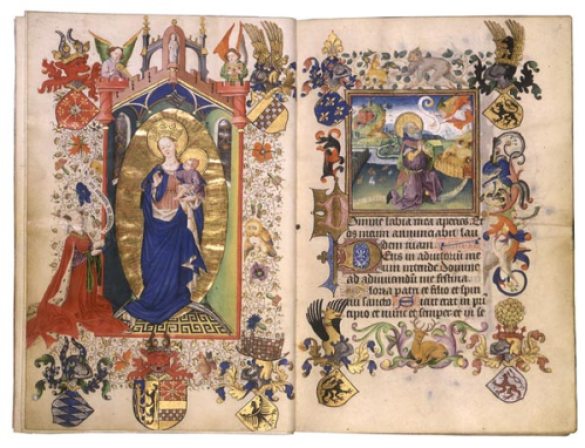
http://medievalfragments.files.wordpress.com/2013/07/meester_van_catharina_van_kleef_-_getijdenboek_van_de_meester_van_catharina_van_kleef4.jpeg

An example of the distortions of translations known to scholars of medieval philosophy is the quote: “Peace on earth, good will to men!”

Luke 2:14

King James Version (KJV)

Glory to God in the highest, and on earth peace, good will toward men.

The actual Greek translation states a different semantic meaning: “Peace on earth towards men of good will!”

The first does not discriminate, the second discriminates.

Many translations exist for the current day bible as many men decided what should be left in and what should be left out of the biblical texts.

Constantine had a huge impact on what books were to be left in, (leaving out the Gnostic gospels), of the current books we know of now.

The path from original Hebrew, then traveling though the Arabic world and translated into Aramaic, and then to Alexandria into Greek, and then into Europe and into Latin.

The Gospel according to Mathew, Mark, Luke, and John are the selected books of the Bible that tell the story of Jesus Christ.

There are other books that the Catholic Orthodoxy has rejected as Heresy and are not included in the Known Bible.  They call them the Gnostic Gospels, and include such books as The Gospel of Thomas, as well as an expunged Gospel from Luke known as the Gospel of the Lord, The Gospel of Truth with the teachings from Pistis Sophia, The Secret book of James, The Acts of Thomas and of Peter, but the commonly known Gnostic Gospels mainly refer to:

  • The Gospel of Mary
  • The Gospel of Thomas
  • The Gospel of Truth
  • The Gospel of Philip
  • The Gospel of Judas
  • The Gospel of Enoch

After the Death of Christ, Christianity spread through-out the known world and into Europe from Rome.  In the year 325 The Roman Emperor Constantine Puts an end to the persecution of Christians, and adopts Christianity as the official Religion.  Only a few sects of Christianity was allowed to be followed by the direction of Constantine and the now growing power of the Catholic church.

In the beginning of the 8th Century the Muslim advance began which found these Muslim Arab attacks into Europe.  In 1099 the European Christians launched the Crusades.  These were military and religious campaigns to take back the Holy Land.  This in turn gave rise to military orders of personnel enshrouded in legends and mystery.  One of these orders became The Poor Fellow Soldiers Of Christ, or the Knights Templar.  It begins with the first crusade led by Godfrey of Bullion who was said to have uncovered great relics in the Holly land after his siege upon it.  To preserve the secrets he had uncovered on the first crusade he enacted the Order of Scion in the wake of Godfrey II.

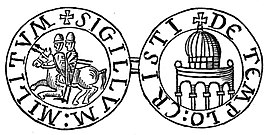
Seal of Templars.jpg

Officially endorsed by the Catholic Church around 1129, the Order became a favored charity throughout Christendom and grew rapidly in membership and power. Templar knights, in their distinctive white mantles with a red cross, were among the most skilled fighting units of the Crusades.  Non-combatant members of the Order managed a large economic infrastructure throughout Christendom,  innovating financial techniques that were an early form of banking,  and building fortifications across Europe and the Holy Land.

The Templars’ existence was tied closely to the Crusades; when the Holy Land was lost, support for the Order faded. Rumors about the Templars’ secret initiation ceremony created mistrust and King Philip IV of France, deeply in debt to the Order, took advantage of the situation. In 1307, many of the Order’s members in France were arrested, tortured into giving false confessions, and then burned at the stake.  Under pressure from King Philip, Pope Clement V disbanded the Order in 1312. The abrupt disappearance of a major part of the European infrastructure gave rise to speculation and legends, which have kept the “Templar” name alive into the modern day.

The crusades took place for about 200 years.  Whatever was uncovered by the first crusade in the temple of Solomon by the Templars has been kept secret and has caused great speculation even until this day.  If the origins of the central banking system we known today spawned from the Templars’, why did the church exempt them for so long?  Was it because of the secrets they had uncovered in the temple of Solomon?

Is that why they ultimately met their downfall in 1307 when King Philip IV ordered their execution on Friday the 13th?

In 1305, the new Pope Clement V, based in France, sent letters to both the Templar Grand Master Jacques de Molay and the Hospitaller Grand Master Fulk de Villaret to discuss the possibility of merging the two Orders.  Neither was amenable to the idea, but Pope Clement persisted, and in 1306 he invited both Grand Masters to France to discuss the matter. De Molay arrived first in early 1307, but de Villaret was delayed for several months.  While waiting, De Molay and Clement discussed criminal charges that had been made, it seems, two years prior by an ousted Templar and had been taken up by the king of France and his ministers.  It was generally agreed that the charges were false, but Clement sent King Philip IV of France a written request for assistance in the investigation.  According to some historians, King Philip, who was already deeply in debt to the Templars from his war with the English, decided to seize upon the rumors for his own purposes.  He began pressuring the Church to take action against the Order, as a way of freeing himself from his debts.  Recent studies emphasize the political and religious motivations of the French king. It seems that, with the “discovery” and repression of the “Templars’ heresy,” the Capetian monarchy claimed for itself the mystic foundations of the papal theocracy.  The Temple case was the last step of a process of appropriating these foundations, which had begun with the Franco-papal rift at the time of Boniface VIII.  Being the ultimate defender of the Catholic faith, the Capetian king was invested with a Christlike function that put him above the pope: what was at stake in the Templars’ trial was the establishment of a “royal theocracy”.

After the imposed war on the Templars’, The Priory of Scion was formed, thus the secrecy of the Templars goes underground.

The Holly Inquisition becomes tantamount when one looks at the treatment of the Templars and the treatment of Women given the implication of the Gnostic Gospels.  The Heretical implication of the works of Leonardo Da Vinci  such as the Last Supper had to be painted in a very secretive code.  Otherwise he to would befall the fate of the Inquisitors.  The fact that Leonardo was also a Grand Master of the Templars is very curious yet gives support to the idea that there was something he was communicating that may not have been excepted by the power of the Church. Leonardo being a Grand Master would have denounced the treatment of the Church of the Gospels, and therefore would have reason to paint within his own beliefs, or rather, paint in a way as to render his painting with hidden truths.

During most of the 16th and 17th centuries, fear of heretics spreading teachings and opinions that contradicted the Bible dominated the Catholic Church.  They persecuted scientists who formed theories the Church deemed heretical and forbade people from reading any books on those subjects by placing the books on the Index of Prohibited Books.  A type of war between science and was in play but there would be more casualties on the side of science. Nicholas Copernicus and Galileo Galilei were two scientists who printed books that later became banned. Copernicus faced no persecution when he was alive because he died shortly after publishing his book. Galileo, on the other hand, was tried by the Inquisition after his book was published.  Both scientists held the same theory that the Earth revolved around the sun, a theory now known to be true.  However, the Church disapproved of this theory because the Holy Scriptures state that the Earth is at the center, not the Sun.  As the contents of the Bible were taken literally, the publishing of these books proved, to the Church, that Copernicus and Galileo were sinners; they preached, through their writing, that the Bible was wrong.

for an account of the biblical manuscripts see Wikipedia’s treatment

Hebrew Bible

The Tanakh was mainly written in Biblical Hebrew, with some portions (notably in Daniel and Ezra) in Biblical Aramaic. From the 9th century to the 15th century, Jewish scholars, today known as Masoretes, compared the text of all known biblical manuscripts in an effort to create a unified, standardized text. A series of highly similar texts eventually emerged, and any of these texts are known as Masoretic Texts (MT). The Masoretes also added vowel points (called niqqud) to the text, since the original text only contained consonant letters. This sometimes required the selection of an interpretation, since some words differ only in their vowels—their meaning can vary in accordance with the vowels chosen. In antiquity, variant Hebrew readings existed, some of which have survived in the Samaritan Pentateuch and other ancient fragments, as well as being attested in ancient versions in other languages.[2]

New Testament

The New Testament was written in Koine Greek.
The discovery of older manuscripts, which belong to the Alexandrian text-type, including the 4th century Codex Vaticanus and Codex Sinaiticus, led scholars to revise their view about the original Greek text. Attempts to reconstruct the original text are called critical editions. Karl Lachmann based his critical edition of 1831 on manuscripts dating from the 4th century and earlier, to demonstrate that the Textus Receptus must be corrected according to these earlier texts.

The autographs, the Greek manuscripts written by the original authors, have not survived. Scholars surmise the original Greek text from the versions that do survive. The three main textual traditions of the Greek New Testament are sometimes called the Alexandrian text-type (generally minimalist), the Byzantine text-type (generally maximalist), and the Western text-type (occasionally wild). Together they comprise most of the ancient manuscripts.

Most variants among the manuscripts are minor, such as alternative spelling, alternative word order, the presence or absence of an optional definite article (“the”), and so on. Occasionally, a major variant happens when a portion of a text wasor variants tend to be easier to correct. Examples of major variants are the endings of Mark, the Pericope Adulteræ, the Comma Johanneum, and the Western version of Acts.

Early manuscripts of the letters of Paul and other New Testament writings show no punctuation whatsoever.   The punctuation was added later by other editors, according to their own understanding of the text.

History of Bible translations

Ancient translations of the Hebrew Bible

Aramaic Targums

Some of the first translations of the Jewish Torah began during the first exile in Babylonia, when Aramaic became the lingua franca of the Jews. With most people speaking only Aramaic and not understanding Hebrew, the Targums were created to allow the common person to understand the Torah as it was read in ancient synagogues.

Greek Septuagint

By the 3rd century BC, Alexandria had become the center of Hellenistic Judaism, and a Koine Greek translation was compiled in several stages during the 3rd to 2nd centuries BC (known to have been complete by 132 BC). The Talmud ascribes the translation effort to Ptolemy II Philadelphus (r. 285-246 BC) who is said to have hired 72 Jewish scholars for the purpose, for which reason the translation is commonly known as the Septuagint, a name which it gained around AD 354-430, “the time of Augustine of Hippo“.[4] The Septuagint (LXX) was the very first translation of the Hebrew Bible into Greek, and later became the accepted text of the Old Testament in the church and the basis of its canon. The Latin Vulgate by Jerome was based upon the Hebrew for those books of the Bible preserved in the Jewish canon (as reflected in the masoretic text), and on the Greek text for the deuterocanonical books.

In his City of God 18.42, while repeating the story of Aristeas with typical embellishments, Augustine adds the remark, “It is their translation that it has now become traditional to call the Septuagint” …[Latin omitted]… Augustine thus indicates that this name for the Greek translation of the scriptures was a recent development. However, he offers no clue as to which of the possible antecedents led to this development:[5]  and was widely used by Greek-speaking Jews, and later by Christians.[6]  It differs somewhat from the later standardized Hebrew (Masoretic Text). This translation was promoted by way of a legend (primarily recorded as the Letter of Aristeas) that seventy (or in some sources, seventy-two) separate translators all produced identical texts; supposedly proving its accuracy.[7]

Versions of the Septuagint contain several passages and whole books beyond what was included in the Masoretic texts of the Tanakh. In some cases these additions were originally composed in Greek, while in other cases they are translations of Hebrew books or variants not present in the Masoretic texts. Recent discoveries have shown that more of the Septuagint additions have a Hebrew origin than was once thought. While there are no complete surviving manuscripts of the Hebrew texts on which the Septuagint was based, many scholars believe that they represent a different textual tradition (“Vorlage”) from the one that became the basis for the Masoretic texts.[2]

Early translations in Late Antiquity

Origen‘s Hexapla placed side by side six versions of the Old Testament, including the 2nd century Greek translations of Aquila of Sinope and Symmachus the Ebionite. His eclectic recension of the Septuagint had a significant influence on the Old Testament text in several important manuscripts. The canonical Christian Bible was formally established by Bishop Cyril of Jerusalem in 350 (although it had been generally accepted by the church previously), confirmed by the Council of Laodicea in 363 (both lacked the book of Revelation), and later established by Athanasius of Alexandria in 367 (with Revelation added), and Jerome‘s Vulgate Latin translation dates to between AD 382 and 420. Latin translations predating Jerome are collectively known as Vetus Latina texts.

Christian translations also tend to be based upon the Hebrew, though some denominations prefer the Septuagint (or may cite variant readings from both). Bible translations incorporating modern textual criticism usually begin with the masoretic text, but also take into account possible variants from all available ancient versions. The received text of the Christian New Testament is in Koine Greek,[8] and nearly all translations are based upon the Greek text.

Jerome began by revising the earlier Latin translations, but ended by going back to the original Greek, bypassing all translations, and going back to the original Hebrew wherever he could instead of the Septuagint.

The New Testament was translated into Gothic in the 4th century by Ulfilas. In the 5th century, Saint Mesrob translated the bible into Armenian. Also dating from the same period are the Syriac, Coptic, Old Nubian, Ethiopic and Georgian translations.

There are also several ancient translations, most important of which are in the Syriac dialect of Aramaic (including the Peshitta and the Diatessaron gospel harmony), in the Ethiopian language of Ge’ez, and in Latin (both the Vetus Latina and the Vulgate). Wulfila, bishop of the Goths in what is now Bulgaria, translated the Bible into Gothic in the mid-4th century.

In 331, the Emperor Constantine commissioned Eusebius to deliver fifty Bibles for the Church of Constantinople. Athanasius (Apol. Const. 4) recorded Alexandrian scribes around 340 preparing Bibles for Constans. Little else is known, though there is plenty of speculation. For example, it is speculated that this may have provided motivation for canon lists, and that Codex Vaticanus Graecus 1209, Codex Sinaiticus and Codex Alexandrinus are examples of these Bibles. Together with the Peshitta, these are the earliest extant Christian Bibles.[9]

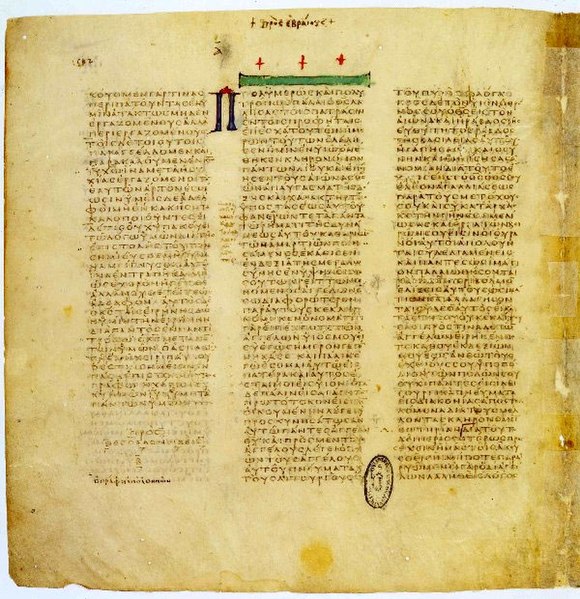
File:Codex Vaticanus B, 2Thess. 3,11-18, Hebr. 1,1-2,2.jpg

Middle Ages

The Codex Gigas from the 13th century, held at the Royal Library in Sweden.

When ancient scribes copied earlier books, they wrote notes on the margins of the page (marginal glosses) to correct their text—especially if a scribe accidentally omitted a word or line—and to comment about the text. When later scribes were copying the copy, they were sometimes uncertain if a note was intended to be included as part of the text. See textual criticism. Over time, different regions evolved different versions, each with its own assemblage of omissions and additions.

The earliest surviving complete manuscript of the entire Bible is the Codex Amiatinus, a Latin Vulgate edition produced in 8th century England at the double monastery of Wearmouth-Jarrow.

During the Middle Ages, translation, particularly of the Old Testament was discouraged. Nevertheless, there are some fragmentary Old English Bible translations, notably a lost translation of the Gospel of John into Old English by the Venerable Bede, which he is said to have prepared shortly before his death around the year 735. An Old High German version of the gospel of Matthew dates to 748. Charlemagne in ca. 800 charged Alcuin with a revision of the Latin Vulgate. The translation into Old Church Slavonic was started in 863 by Cyril and Methodius.

Alfred the Great had a number of passages of the Bible circulated in the vernacular in around 900. These included passages from the Ten Commandments and the Pentateuch, which he prefixed to a code of laws he promulgated around this time. In approximately 990, a full and freestanding version of the four Gospels in idiomatic Old English appeared, in the West Saxon dialect; these are called the Wessex Gospels.

Pope Innocent III in 1199 banned unauthorized versions of the Bible as a reaction to the Cathar and Waldensian heresies. The synods of Toulouse and Tarragona (1234) outlawed possession of such renderings. There is evidence of some vernacular translations being permitted while others were being scrutinized.

The complete Bible was translated into Old French in the late 13th century. Parts of this translation were included in editions of the popular Bible historiale, and there is no evidence of this translation being suppressed by the Church.[10]  The entire Bible was translated into Czech around 1360.

The most notable Middle English Bible translation, Wyclif’s Bible (1383), based on the Vulgate, was banned by the Oxford Synod in 1408. A Hungarian Hussite Bible appeared in the mid 15th century, and in 1478, a Catalan translation in the dialect of Valencia. Many parts of the Bible were printed by William Caxton in his translation of the Golden Legend, and in Speculum Vitae Christi (The Mirror of the Blessed Life of Jesus Christ).

Reformation and Early Modern period

The earliest printed edition of the Greek New Testament appeared in 1516 from the Froben press, by Desiderius Erasmus, who reconstructed its Greek text from several recent manuscripts of the Byzantine text-type. He occasionally added a Greek translation of the Latin Vulgate for parts that did not exist in the Greek manuscripts. He produced four later editions of this text. Erasmus was Roman Catholic, but his preference for the Byzantine Greek manuscripts rather than the Latin Vulgate led some church authorities to view him with suspicion.

In 1521, Martin Luther was placed under the Ban of the Empire, and he retired to the Wartburg Castle. During his time there, he translated the New Testament from Greek into German. It was printed in September 1522. The first complete Dutch Bible, partly based on the existing portions of Luther’s translation, was printed in Antwerp in 1526 by Jacob van Liesvelt.[11]

The first printed edition with critical apparatus (noting variant readings among the manuscripts) was produced by the printer Robert Estienne of Paris in 1550. The Greek text of this edition and of those of Erasmus became known as the Textus Receptus (Latin for “received text”), a name given to it in the Elzevier edition of 1633, which termed it as the text nunc ab omnibus receptum (“now received by all”).

Later critical editions incorporate ongoing scholarly research, including discoveries of Greek papyrus fragments from near Alexandria, Egypt, that date in some cases within a few decades of the original New Testament writings.[12] Today, most critical editions of the Greek New Testament, such as UBS4 and NA27, consider the Alexandrian text-type corrected by papyri, to be the Greek text that is closest to the original autographs. Their apparatus includes the result of votes among scholars, ranging from certain {A} to doubtful {E}, on which variants best preserve the original Greek text of the New Testament.

Critical editions that rely primarily on the Alexandrian text-type inform nearly all modern translations (and revisions of older translations). For reasons of tradition, however, some translators prefer to use the Textus Receptus for the Greek text, or use the Majority Text which is similar to it but is a critical edition that relies on earlier manuscripts of the Byzantine text-type. Among these, some argue that the Byzantine tradition contains scribal additions, but these later interpolations preserve the orthodox interpretations of the biblical text—as part of the ongoing Christian experience—and in this sense are authoritative. Distrust of the textual basis of modern translations has contributed to the King-James-Only Movement.

The churches of the Protestant Reformation translated the Greek of the Textus Receptus to produce vernacular Bibles, such as the German Luther Bible (1522), the Polish Brest Bible (1563), the Czech Melantrich Bible (1549) and Bible of Kralice (1579-1593) and the English King James Bible (1611).

Tyndale’s New Testament translation (1526, revised in 1534, 1535 and 1536) and his translation of the Pentateuch (1530, 1534) and the Book of Jonah were met with heavy sanctions given the widespread belief that Tyndale changed the Bible as he attempted to translate it. The first complete French Bible was a translation by Jacques Lefèvre d’Étaples, published in 1530 in Antwerp.[13] The Froschauer Bible of 1531 and the Luther Bible of 1534 (both appearing in portions throughout the 1520s) were an important part of the Reformation.

The first English translations of Psalms (1530), Isaiah (1531), Proverbs (1533), Ecclesiastes (1533), Jeremiah (1534) and Lamentations (1534), were executed by the Protestant Bible translator George Joye in Antwerp. In 1535 Myles Coverdale published the first complete English Bible also in Antwerp.[14]

In 1584 both Old and New Testaments were translated to Slovene by Protestant writer and theologian Jurij Dalmatin. The Slovenes thus became the 12th nation in the world with a complete Bible in their language. Samuel Bogusław Chyliński (1631–1668) translated and published the first Bible translation into Lithuanian.[15]

The missionary activity of the Jesuit order led to a large number of 17th century translations into languages of the New World.

Modern translation efforts

The Bible continues to be the most translated book in the world. The following numbers are approximations. As of 2005, at least one book of the Bible has been translated into 2,400 of the 6,900 languages listed by SIL,[16][not in citation given] including 680 languages in Africa, followed by 590 in Asia, 420 in Oceania, 420 in Latin America and the Caribbean, 210 in Europe, and 75 in North America. The United Bible Societies are presently assisting in over 600 Bible translation projects. The Bible is available in whole or in part to some 98 percent of the world’s population in a language in which they are fluent.

The United Bible Societies announced that as of 31 December 2007[17] the Bible was available in 438 languages, 123 of which included the deuterocanonical material as well as the Tanakh and New Testament. Either the Tanakh or the New Testament alone was available in an additional 1168 languages, and portions of the Bible were available in another 848 languages, for a total of 2,454 languages.

In 1999, Wycliffe Bible Translators announced Vision 2025. This project aims to see Bible translation begun by 2025 in every remaining language community that needs it. They currently estimate that around 209 million people, representing 2.95% of the world’s population, speak those 1,967 languages where translation work still needs to begin.

In November 2012, Wycliffe presented statistics that said that scripture existed in 2,798 languages out of the 6,877 languages currently known to be in use in the world. There are currently 518 languages with a full bible translation. At least 4.9 billion people (70% of the world’s population) have access to a full bible translation in their first language. A further 595 million (8.5% of the world’s population), representing 1,275 languages, have at least the New Testament in their first language. Also, 1,005 languages (almost 20% of the world’s population) have at least one portion of scripture (one or more books) available in their first language. By September 2012, personnel from participating bible translation organizations were involved in 2075 active language programs.[18]

The New World Translation produced by the Watch Tower Bible and Tract Society is currently (according to the The Watchtower Magazine of February 15, 2013), produced in over 116 languages and more than 178,545,862 copies have been printed, (somewhat less than the 215,000,000 copies of the popular New International Version translation of the Bible in English).

In 2001, Mike Coles, an RE teacher in Stepney, translated The Bible into Cockney Rhyming slang and in 2008, graphic representations of The Bible in Manga and Lego brick form were given approval by the Archbishop of Canterbury.[19]

The Zhuang language is considered to be the language without a Bible translation that holds the largest number of speakers, with 16 million.[20]

Differences in Bible translations

This Gutenberg Bible is displayed by the United States Library of Congress

Dynamic or formal translation policy

A variety of linguistic, philological and ideological approaches to translation have been used. Inside the Bible-translation community, these are commonly categorized as:

though modern linguists such as Bible scholar Dr. Joel Hoffman disagrees with this classification.[21]

As Hebrew and Greek, the original languages of the Bible, like all languages, have some idioms and concepts not easily translated, there is in some cases an ongoing critical tension about whether it is better to give a word for word translation or to give a translation that gives a parallel idiom in the target language. For instance, in the New American Bible, which is the English language Catholic translation, as well as Protestant translations like the King James Version, the Darby Bible, the New Revised Standard Version, the Modern Literal Version, and the New American Standard Bible are seen as more literal translations (or “word for word”), whereas translations like the New International Version and New Living Translation sometimes attempt to give relevant parallel idioms. The Living Bible and The Message are two paraphrases of the Bible that try to convey the original meaning in contemporary language. The further away one gets from word for word translation, the text becomes easier to read while relying more on the theological, linguistic or cultural understanding of the translator, which one would not normally expect a lay reader to require.

Doctrinal differences and translation policy

In addition to linguistic concerns, theological issues also drive Bible translations. Some translations of the Bible, produced by single churches or groups of churches, may be seen as subject to a point of view by the translation committee.

Among these the New World Translation, produced by Jehovah’s Witnesses, is seen as controversial by some because of the renderings of key verses. Especially verses, that in other Bible translations support the deity of Christ, are rendered differently in the NWT.

Also, the NWT often translates the New Testament Kyrios, “Lord,” as “Jehovah” when referring to God. The publishers argue that this can be supported by the fact that the oldest copies of the Greek Septuagint found among the Dead Sea Scrolls (such as 8HevXIIgr) generally have the Hebrew tetragrammaton in the Greek text rather than Greek Kyrios as found in later Septuagint manuscripts. An exception to this is the Cave4 Leviticus fragment, which has Greek Iao.[22] The NWT translators believe that when Jesus read from such earlier scrolls he would have used God’s name and not the title. (Luke 4:18, Jo 17:6, 26) The NWT translators did this despite the fact that the tetragrammaton does not appear in the Greek manuscript of the New Testament books. The Greek manuscripts use Kyrios to refer both to Jesus Christ and God the Father.[23]

A number of Sacred Name Bibles have been published that are even more rigorous in transliterating the tetragrammaton, using Semitic forms to translate it in the Old Testament and also using the same Semitic forms to translate the Greek word Theos in the New Testament.

Other translations are distinguished by smaller, but distinctive, doctrinal differences. For example, the Purified Translation of the Bible, by translation and explanatory footnotes, promoting the position that Christians should not drink alcohol, that New Testament references to “wine” are correctly translated as “grape juice”.

Police Car One-Zero-Nine

Message in a bottle

Sending out an SOS

Perplexity for Felix

His identity has become detached

Aligning himself with poor choices

Police car one-zero-nine now dispatched

Pent up feelings

Will never cease to rest

Boiling water turns to steam

The heat will burn when this vapor is expressed

Ticking time bomb

The clock tick’s away

Part of the human condition

Tick-Tock; what more do I need to say?

Our capacity for emotion

Great love or great hate

The worst kind of human experience

Apathy eradicates human fate

Both the heart and mind must guide you

Especially of what you feel

The wisdom of this harmony

Is precisely in its appeal


DCG

Tender my Frustration


Tender my frustration

Only the law abiding will pay

A state can never impose any law

That the criminal will ever obey

Tender my frustration

The working man’s plea

There is no incentive to work

When you collect off the taxpayer’s assist

Wait, what else can I take as a perk

Tender my frustration

What’s mine is mine

What’s yours is yours

Learn to make it on your own

But you’ve gotta do your chores

Tender my frustration

Words are words

Often the politically correct

Use a narrative to bend logic

Only to misdirect

Tender my frustration

I know I’m not alone

Only by working together

Cutting through all of the hormone

Tender my frustration

We must find a way

Else we will parish

Under the boot in the face or the bullets that ricochet

DCG

I am the Peacock

Sally just Tweeted

Her opinion of the day

Like-minded people

Showing their dismay

The expression of ideas

Social media threads

Emotional argumentation

Of people with some not well-read

I am the peacock

Watch me as I strut

See my pretty plumage

I am purebred and not a mutt

Sam just posted a YouTube

It’s on the internet so it must be true

He’s certain of it’s authenticity

But still the matter is up to you

Who Compares and Despairs?

Inspecting another persons post

Is this your orientation?

Be ready for the roast

So many opinions

So many ways to disseminate

How do you see the world?

How do you calculate?

The digital divide

Those who produce and those who consume

Who makes the virtue signals?

Are we tolerant; do we make any room?

Make a page on Facebook

Send a SnapChat

Maybe my Instagram

Will change some of that

We all want to be right

We all want to make sense

Start not by politicizing your opinion

Opinion means nothing

To those who defy pretense

Even the bloggers

Who try very hard

Sometimes get it wrong

Create their own canard

So where can we find any Truth?

Not in a comedy show

Not on the media streams

Believe in these sources and you’ll probably eat crow

Turn not to Science

This is not the domain

Paste another example

Able to defeat Man’s bane

Finding this answer

Our history shows us best

Turn to the philosopher

‘Tis only in logic that we can attest

DCG