from “The Symbolic Prophecy of the Great Pyramid” First Edition 1936
H. Spencer Lewis, Ph. D. Imperator, Supreme Grand Lodge of A.M.O.R.C.
In addition to the secret passages, chambers, halls, and other features of the main or central part of the Pyramid which were for centuries unknown and still constitute a mysterious study, there have been traditions for many years about the other passageways in the Pyramid or beneath it which have not yet been fully revealed, and the passageways that lead to the Pyramid from nearby points. In any study of the Pyramid, the environs (landscape architecture) of the Pyramid is taken into consideration, including the Sphinx, the courtyard in front of the Sphinx, and the temple that adjoined the Sphinx and which has recently been excavated.
According to the traditions and to some of the mystical manuscripts with limited release in recent years, the Great Pyramid is but the central point or feature of a magnificent symbolical plot or section of Egypt that contains a mystery in each square yard of its surface. As with every other temple of mystery, there are stories, reports, and traditions which scientists deny and many so-called authorities ridicule. But in the past few centuries a number of these traditions have been lifted out of the category of mere mystical fiction into fact by the excavations that have taken place. For centuries there was a whispered story that there was a ceremonial court or courtyard in front of the Sphinx, buried beneath the sands, in which court initiation ceremonies were held prior to the entrance into the Pyramid.
For centuries geologists ridiculed this whispered story and likewise some historians along with many of the natives and officials of Egypt. However, in recent years the sand around and especially in front of the Sphinx has been removed revealing a very beautiful pavement of a courtyard between the paws and in front of the breast of the Sphinx, and in the center of this court, a symbolical altar that had no use in any of the priesthood religions of Egypt but was known to have its place in the temples of mystery for initiation ceremonies. Thus the sunlight has touched upon the ancient pavement by the removal of the sands, and the light of truth has confirmed one of the old traditions.
Another of the traditions was that a great movable stone or slab in front of the breast of the Sphinx, between its paws, blocked the entrance way to a secret passage that ran beneath the Sphinx and beneath the sands to the center of the Great Pyramid, and that this long passageway was the secret ceremonial passageway from the outer court in front of the Sphinx to the rising passageways and chambers in the Pyramid itself. Old stories told how this great stone with its symbolical writings, warnings, and laws for the initiate, would move mysteriously upon invisible hinges and open to the commands of candidates standing in the court, or in front of it, upon the oral recitation of the proper word. Then the candidates with the official torch-bearer and guardian would enter the passageway chanting, and as the last note of the chant sounded … the great stone door would silently move to a closed position and the world shut out behind again while the pilgrimage of initiates moved on, toward the Pyramid, beneath the sands of the desert, hidden from all the world, and in a soundless passage that was significant of the early period of the universe when the world was without sound.
Such stories, of course, rejected and scoffed but still they persist. The recently excavated temple adjoining the Sphinx was not believed to be in existence either, and now it is looked upon as the preparation chamber for the initiates before they entered the court in front of the Sphinx. As one looks down into the uncovered chambers of this temple adjoining the Pyramid, one wonders what other use there could have been for a subterranean temple, or any kind of temple, in this peculiar position along the ceremonial court of the Sphinx. Still scientists, historians, and officials scoff at the idea that it had anything to do with initiation ceremonies.
The great stone slab, firmly fixed against the breast of the Sphinx in front of the two paws, revealed and uncovered symbolical writings and warnings that can be interpreted in various ways, but certainly have significance to candidates of the mysteries and to the expectant observer. Whether that stone slab, huge in size and weight, is movable or not has not been determined, and whether there is a passageway behind it has not yet been conclusively determined.
Speaking of the impossibility of a huge stone of this size and weight moving of its own accord upon invisible hinges, let us not forget that there was one other court of mystery at one time where such things did occur. Heavy gates guarded the entranceway to this court and they could not be opened unless a sacred ceremony was held around the altar before them. Here, with fire burning upon the altar, and with the chanting of voices, at the crucial moment of the spiritual ritual, the huge gates automatically opened and the devotees then entered. Within the walls they found a temple there in the courtyard and fountains that would play with streams of water through the effect of music and chanting. Science investigated these mysteries and found that one master mechanic of the time, known as Heron of Alexandria, used some of the great knowledge of the laws of physics known to the Egyptian mystery schools and constructed many marvelous pieces of mechanism that operated through laws and principles rediscovered only in modern times by eminent scientists. Think also of Ed Leeskalnin and the coral castle.
If the great gates which Heron invented would move some mysterious way through natural laws, there is no reason for us to doubt a huge stone gate moving in the similar fashion before the Sphinx in Egypt.
There are still many stories told and many secret or private explanations, accompanied with diagrams and architectural designs, given about the passageways connecting the Sphinx with the Pyramid, and these give color to many strange incidents referred to in the secret writings of the Ancient Egyptians. Some of these underground passageways and their connections are shown in the accompanying diagrams.
Until greater excavations are made around the Pyramid and these passageways are actually revealed to the public and to the light of day so that they may be photographed and entered under special permission, their existence must remain as part of the traditions, for this is the law of the Mystery Schools of Egypt that are still in force. That which is not revealed to the public remains a traditional secret and the public is invited to accept the traditions or reject them as it may see fit.
The stronger the denial on the part of the various persons of authority on some of these secret passageways and temples, the stronger is one’s faith in their existence, for such also seems to be the law of human nature when dealing with things of this strange land.
Facts, Schematics, More Facts
A Sphinx is a zoomorphic mythological figure which is depicted as a recumbent lion with a human head. It has its origins in sculpted figures of Old Kingdom Egypt, to which the ancient Greeks applied their own name for a female monster, the “strangler”, an archaic figure of Greek mythology. Similar creatures appear throughout South and South-East Asia, and the sphinx enjoyed a major revival in European decorative art from the Renaissance onwards.
The Great Sphinx of Egypt, the largest and best known Sphinx, lies near the Great Pyramid in the Giza Valley Plateau, situated about six miles west of Cairo. It is the largest single sculpted statue in the world, carved from the bedrock of the plateau.
The Sphinx is oriented due east facing the rising sun near the 30th parallel, and may well be the oldest monument on the Giza Plateau since long-term water weathering has been found in the great pit in which it lays.
The Western name “Sphinx” was given to it in antiquity based on the legendary Greek creature with the body of a lion and the head of a woman, though Egyptian sphinxes have the head of a man. The ancient Greek term itself is postulated to be a corruption of the ancient Egyptian Shesep-ankh. This name was applied to royal statues in the Fourth Dynasty, though it came to be more specifically associated with the Great Sphinx in the New Kingdom.
In medieval texts, the names balhib and bilhaw referring to the Sphinx are attested, including Egyptian historian Maqrizi, which suggest Coptic constructions. The Egyptian Arabic name Abul-Hol, which translates as Father of Terror, came to be more widely used.
No one is certain when the Sphinx was built nor what it represents, though many theories about its origin and purpose have been noted. It is commonly believed that the Sphinx was built by ancient Egyptians in the 3rd millennium BC. But I side with those like John Anthony West, and Robert Schock as to the dating of the Sphinx that extends far beyond the traditional Egyptological hypothesizes and postulates.
We do not known the name ancient Egyptians called the statue. It is referred to circa 1500 B.C.E. as Hor-em-akht – Horus in the Horizon, Bw-How Place of Horus and also as Ra-horakhty Ra of Two Horizons.
• Horus – Hours – the Place Where Time Began
• Horus – Horse – Horse Horsehead Nebula- Creation
Carved out of the surrounding limestone bedrock, the Sphinx is 57 meters (260 feet) long, 6 m (20 ft) wide, and has a height of 20 m (65 ft), making it one of the largest single-stone statues in the world. Blocks of stone weighing upwards of 200 tons were quarried in the construction phase to build the adjoining Sphinx Temple.
The Sphinx faces due east, with a small temple between its paws. The temple resembles the sun temples that were built later by the kings of the 5th Dynasty.
The first attempt,(speculation), to dig it out dates back to 1400 BC, when the young Tutmosis IV, falling asleep beneath the giant head, had a dream that he was promised the crown if he would only remove the sand from the Sphinx. The young prince immediately formed an excavation party which, after much effort, managed to dig the front paws out. To commemorate this effort, Tuthmoses IV had a granite stela known as the Dream Stela placed between the paws. Ramesses II may have also performed restoration work on the Sphinx.
In 1817 the first modern dig, supervised by Captain Caviglia, uncovered the Sphinx’s chest completely. The entirety of the Sphinx was finally dug out in 1925, to the great pleasure of its numerous visitors.
There are no inscriptions on, or in the Sphinx to indicate who built it.
The true origin and purpose of the Sphinx remains a mystery, and it is perhaps a puzzle which will never be fully solved. Despite its fundamental enigma, the image of the Sphinx remains in the mind of history as the keystone of ancient Egyptian civilization and a part of its religious beliefs.
Missing Nose
The one-meter-wide nose on the face is missing. It has long been presumed that the nose was broken off by a cannon ball fired by Napoleon’s soldiers. However, sketches of the Sphinx by Frederick Lewis Norden made in 1737 and published in 1755 illustrate the Sphinx without a nose.
The Egyptian historian al-Maqrizi, writing in the fifteenth century, attributes the vandalism to Muhammad Sa’im al-Dahr, a Sufi fanatic from the khanqah of Sa’id al-Su’ada. In 1378, upon finding the Egyptian peasants making offerings to the Sphinx in the hope of increasing their harvest, Sa’im al-Dahr was so outraged that he destroyed the nose. Al-Maqrizi describes the Sphinx as the “Nile talisman” on which the locals believed the cycle of inundation depended.
In addition to the lost nose, a ceremonial pharaonic beard is thought to have been attached, although this may have been added in later periods after the original construction. Egyptologist Rainer Stadelmann has posited that the rounded divine beard may not have existed in the Old or Middle Kingdoms, only being conceived of in the New Kingdom to identify the Sphinx with the god Horemakhet.
This may also relate to the later fashion of pharaohs, which was to wear a plaited beard of authority – a false beard (chin straps are actually visible on some statues), since Egyptian culture mandated that men be clean shaven. Pieces of this beard are today kept in the British Museum and the Egyptian Museum.
Head
The head of the Sphinx was altered many times by the Pharaohs therefore it is best remembered with the head of a king wearing his headdress and the body of a lion. Many believe that the original head was that of the lion and the Sphinx dates to the Age of Leo – 12,000 years ago.
Based on the current head, many researchers have concluded that the Sphinx was built by the Pharaoh Khafre – Chephren in the 4th Dynasty around 2500 BC. (current theories suggest that he most likely he re-carved the sphinx, or partly restored it)
Interestingly the features of the face of the Sphinx bear a far more striking resemblance to an older brother of Khafre, the Pharaoh Djedefre – Radjedef. (Head is disproportionate to the body, which may indicated that the head was larger at one time considering the erosion rate of the limestone and enclosure over many thousands of years – thus Khafre, or another may have restored or re-carved the sphinx)
In 1996, a NY detective and expert in identification, took various measurements of the size, angles and proportions of the head and concluded that it did not match known representations of Khafre’s face.
See the Mystery of the Sphinx: John Anthony West, Robert Schoch as to the impact they have had on the dating of the Sphinx.
Djedefre’s short lived reign occurred just prior to the reign of Khafre. Unlike Khafre, Khafre’s father, and later Khafre’s brother Menkara, Djedefre did not construct his pyramid on the Giza plateau. Instead Djedefre built his pyramid at Abu Roash where it now lies badly damaged.
The sphinx has been repaired many times due to erosion by water and wind. Some people believe that the Sphinx was painted and was quite colorful. Since then, the nose and beard have been broken away.
A piece of the original beard
The nose was the unfortunate victim of target practice by the Turks in the Turkish period. It is often erroneously assumed that the nose was shot off by Napoleon’s men, but 18th century drawings reveal that the nose was missing long before Napoleon’s arrival. Traces of the original paint can still be seen only near one ear.
1858
1895
In 1905 the sand was cleared away to expose the full body of the Sphinx. It is thought that the head has been replaced by several different heads – the original the head of a feline cat. ( see Richard Hoagland and his analysis of the Cydonia face on Mars and it’s connection to the sphinx)
The most recent period of restoration began in 2006. The cement which had been used in earlier attempts at restoration was now found to be causing problems. The statue is mostly constructed of porous limestone, which allows the passage of air. Because cement is non-porous and rigid, changes in the basic proportions of the statue were found to be occurring.
Ethnicity of the Face of the Sphinx
Over the years, casual observers, as well as at least one forensic expert have characterized the face of the Sphinx as “of African descent”. One of the earliest known descriptions of an “African” Sphinx is recorded in the travel notes of French scholar Constantin-François de Chassebluf, Comte de Volney, who visited in Egypt between 1783 and 1785. Volney described it as “typically Negro in all its features.” Likewise, French novelist Gustave Flaubert traveled to Egypt in 1849 and recorded the following observation:
• We stop before a Sphinx; it fixes us with a terrifying stare. Its eyes still seem full of life; the left side is stained white by bird-droppings (the tip of the Pyramid of Chephren has the same long white stains); it exactly faces the rising sun, its head is grey, ears very large and protruding, its neck is eroded; from the front it is seen in its entirety thanks to great hollow dug in the sand; the missing nose increases the effect. Besides, it was certainly Ethiopian; the lips are thick.
In 1992, the New York Times published an article reporting the findings of Frank Domingo, a senior forensics artist with the New York City Police Department who had traveled to Egypt to take exact measurements of the Sphinx’s head. Domingo, credited with convening the first national gathering of forensic artists almost ten years earlier, generated a model of the head of the Sphinx both by hand and utilizing computer graphics, and determined that the Sphinx represented a person other than Khafre. Robert M. Schoch of Boston University, (a geologist), further suggests that the face has “a distinctive ‘African,’ ‘Nubian,’ or ‘Negroid’ aspect which is lacking in the face of Khafra.”
The New York Times subsequently published a letter to the editor submitted by Sheldon Peck, who concurred with Domingo:
• The analytical techniques of Detective Frank Domingo used on facial photographs are not unlike methods surgeons use to study facial disfigurements. From the right lateral tracing of the statue’s worn profile a pattern of bimaxilliary prognathism is clearly detectable. This is an anatomical condition of forward development in both jaws, more frequently found in people of African ancestry than in those from Asian or Indo-European stock.
Body
The paws are 50 feet long (15m) while the entire length is 150 feet (45m). The head is 30 (10m) feet long and 14 feet (4m) wide. It is 200 feet long and 65 feet high.
The Sphinx has a tail which wraps around the right hind paw. The paw has been restored in recent years.
Breastplate
The Sphinx has a breast plate between its front paws.
In the New Kingdom, the Sphinx became a symbol of kingship and many kings of this period built temples and stelae (Sphinx Breastplate tablets bearing inscriptions) in the area surrounding the statue. Amenhotep II built a mud-brick temple to the north-east of the Sphinx, and Rameses II, one of the ancient kingdom’s most prolific builders, constructed an altar of granite between its paws. Ancient tablets also show images of worshippers presenting burnt offerings to the Sphinx. (What about the “Inventory Stelae” which is not mentioned here and refers to the sphinx as predating Kafre’s era)
There are many metaphors on the breastplate that following the formula for creation – separation in the physical – to ascension or resurrection of consciousness in the alchemy of time. The lions images, for example, facing in separate directions represent duality in the electromagnetic grids that form our consciousness experience.
In the New Kingdom, the Sphinx became a symbol of kingship and many kings of this period built temples and stelae (upright stone tablets bearing inscriptions) in the area surrounding the statue. Amenhotep II built a mud-brick temple to the north-east of the Sphinx, and Rameses II, one of the ancient kingdom’s most prolific builders, constructed an altar of granite between its paws. Ancient tablets also show images of worshippers presenting burnt offerings to the Sphinx.
Schematics, Tunnels, and Chambers Side doors lead to underground passageways. Underground passageways and chambers in front and rear
Two passages were found in 1978 – one behind the head of the Sphinx and another on the tail. Far from leading to the Pyramids, however, these tunnels merely led downwards under the monument and were made during the past century by treasure-hunters.
During the past two centuries many have come to study and excavate the monument. These include French scholars accompanying Napoleon’s army in 1798, Caviglia in 1816, H. Vyse in 1840, Mariette in 1853, Kamal and Daressy in 1909 and Baraize in 1926. It was Baraize who first began restoration work, by renovating the head using cement, and clearing the sand completely around the Sphinx.
Restoring the paws
Another problem is caused by the rising water table, which evaporates, leaving salts behind. These salts react with the limestone, causing it to become powdery and to crumble. Pollution from the nearby city of Cairo, together with heat, wind, sand and humidity are all agents in the monument’s slow process of disintegration.
In 1982, stones were lost from the north paw and in 1988 a large stone fell from the Sphinx’s shoulder. From 1989 onwards, the restoration project entered a more enlightened phase, with more thought being given to the monument’s long-term preservation in its original form.
The restoration project was planned in three stages: first, to restore the southern side, next the northern side and the chest and lastly, to protect the whole monument from the ravages of the elements.
The large old stones and cement were removed from the southern side and replaced with new stones from a quarry at Helwan, which contains rock consistent with the limestone of the original structure. Mortar made of lime and sand replaced the cement as a fixative, and the chest was protected by a limestone course.
The Institute of Astronomy and Geophysics at Helwan conducted important studies on the level of the water table, and this has been found to be seven meters below the base of the monument. An electronic weather station nearby at the Getty Institute now records wind, heat and humidity, and a study of the bedrock under the Sphinx has been undertaken by the Engineering Faculty at Cairo University.
Enclosure Wall Found
Newly Discovered Walls Buffered Sphinx from Egypt’s Sand
Live Science – November 3, 2010
A routine excavation has uncovered ancient walls surrounding the Great Sphinx of Giza, Egypt’s Supreme Council of Antiquities (SCA) announced. The walls were likely built to protect the Sphinx from blowing sand, said SCA Secretary-General Zahi Hawass, who is overseeing the excavation.
During routine digging, SCA researchers found two segments of mud wall on the Giza Plateau, where the pyramids of Giza and the Sphinx stand. Both walls stand just under 3 feet (1 meter). One runs north-south and is 282 feet (86 meters) long, while the other runs east-west and is 151 feet (46 m) long. The walls are part of a larger enclosure previously found north of the Sphinx. As told in ancient Egyptian texts, King Thutmose IV once went on a hunting trip near the Sphinx.
After the trip, he dreamt that the Sphinx wanted him to clear the sand surrounding its body. According to Thutmose, the Sphinx promised that if he restored the statue, he’d become king of Egypt. So Thutmose had the sand cleared and built a wall to preserve the Sphinx. Until now, researchers thought the wall was only built on the northern side of the Sphinx. The new finding disproves that theory.
The researchers also found a third wall to the east of the temple of King Khafre, the (alleged) builder of the second-largest pyramid in Giza and the likely (alleged) builder of the Sphinx. According to Hawass, the wall may be part of the settlement that grew up around King Khafre’s pyramid after the monarch’s death around 2532 B.C. In this village, priests and officials oversaw the mortuary cult of the dead king.
Khafre’s mortuary cult remained strong until the end of Egypt’s Old Kingdom around 2143 to 2134 B.C. After that, initial excavations suggest the village was abandoned, said Essam Shehab, the supervisor of the Khafre’s valley temple excavation. Excavations continue on the Thutmose IV enclosure wall, according to the SCA. The archeologists are keeping an eye out for other secrets still hidden in the sand.
See John Anthony West and Dr. Robert Schoch’s theories on the Geological dating of the sphinx discussed in the documentary “The mystery of the sphinx”. Evidence is submitted that the Sphinx is much, much older than conventional theories that is based on the geological evidence of water erosion on the sphinx enclosure and the sphinx itself. The theory suggests that the dating could be up to 10,500 years old, (approximately 7000 years older than previously thought), and possible even older when the last ice age occurred and resulted in torrential rains/floods that has eroded the sphinx enclosure and predates the formation of the Sahara desert when the climate changed in north Africa after the ice age ended.
Photo from 1849
Photo taken in 1849
here we see a image of the sphinx temple , notice the whole in the bedrock in the middle of the photo.
Here is another view of that “hole” what you are viewing is a 100 ton granite block that has been carted up from aswan and sunk into the bedrock .
why ?
This piece of granite goes under the wall of the sphinx temple , so it was laid into the bedrock before the temple was constructed .
The Great Pyramid is the most remarkable building in existence on the face of our planet today. It was built with such precision that our current technology cannot replicate it. This pyramid is so precisely constructed that until recently (with laser measuring equipment) scientists were not able to discover some of its subtle symmetries (not to mention duplicate them). Among other aspects, there are also very exact geometric relationships between all the structures in the pyramid complex at Giza.
It is facts such as these that should raise questions about the commonly accepted (and mostly mistaken) interpretations of its purpose, history and construction, as well as the history of our society (and especially the so-called ‘pre-history’ of mankind). There are many answers out there, all you have to do is look.
Here are some facts that have recently been re-discovered about this structure…
General
It is estimated that the pyramid has about 2,300,000 stone blocks weighing from 2-30 Tons each with some weighing as much as 70 tons. (see Socrates T. and computer model of new calculations of this figure.
There is so much stone mass in the pyramid that the interior temperature is constant and equals the average temperature of the earth, 20 Degrees Celsius (68 Degrees Fahrenheit).
Two types of limestone was used for construction. A soft limestone either pure or nummulitic made for the bulk of the core blocks and a hard white limestone for the mantle. Hard limestone becomes more polished with age.
The base of the pyramid covers 55,000 m2 (592,000 ft 2) with each side greater than 20,000 m2 (218,000 ft 2) in area.
The outer mantle is composed of 144,000 casing stones, all highly polished and flat to an accuracy of 1/100th of an inch, about 100 inches thick and weighing about 15 tons each.
The average casing stone on the lowest level was 5 ft. long by 5 ft. high by 6 ft. deep and weighed 15 tons.
The mortar used is of an unknown origin. On analysis, its chemical composition is known but it cannot be reproduced. It is stronger than the stone and still holding up today.
The cornerstone foundations of the pyramid have ball and socket construction capable of dealing with heat expansion and earthquakes.
There are no hieroglyphics or writing in the Great Pyramid.
With the mantle in place, the Great Pyramid could be seen from the mountains in Israel and probably the moon as well.
Its polished surfaces would have reflected light like a beacon.
Aligned True North: The Great Pyramid is the most accurately aligned structure in existence and faces true north with only 3/60th of a degree of error. As the North Pole moves over time, the pyramid was exactly aligned to True North at one time in the past.
Center of Land Mass: The Great Pyramid is aligned to the center of the land mass of the earth. The east/west parallel that crosses the most land and the north/south meridian that crosses the most land intersect in two places on the earth, one in the ocean and the other at the Great Pyramid.
The relationship between Pi (p) and Phi (F) is encoded in the fundamental proportions of the Great Pyramid.
Numbers of relevance:
The length of a base is 9131 Pyramid Inches from corner to corner in a straight line.
The length of a base side at the base socket level is 9,131 Pyramid Inches or 365.24 Pyramid Cubits.
The length of a base side at sidereal socket level is 9,131.4 Pyramid Inches or 365.256 Pyramid Cubits.
The length of the perimeter at the sidereal socket level is 36,525.63629 Pyramid Inches.
The perfect formula height of the pyramid including the missing apex is 5 813.2355653763 Pyramid Inches, calculated from perimeter of base divided by 2 Pyramid Inches.
The height to the missing apex is 5,812.98 Pyramid Inches.
The volume of the pyramid is: V = 1/3 base area x height = 161,559,817,000 cubic Pyramid Inches = 10,339,828.3 cubic Pyramid Cubits. [(5,813.2355653 Pyramid Inches)/3 * 9 131 Pyramid Inches * 9 131 Pyramid Inches]
Precision of engineering:
The four faces of the pyramid are slightly concave, the only pyramid to exist in this way.
The centers of the four sides indent with an extraordinary degree of precision forming the only 8 sided pyramid.
The effect is not visible from the ground or from a distance but only from the air, and then only under the proper lighting conditions.
The granite coffer in the “King’s Chamber” is too big to fit through the passages and so it either was placed during construction, or produced on site inside the chamber itself.
Microscopic analysis of the coffer reveals that it’s construction utilized a fixed point drill that used hard jewel bits and a drilling force of 2 tons.
The coffer was possible quarried out of a block of solid granite. This would have required bronze saws 8-9 ft. long set with teeth of sapphires. Hollowing out of the interior would need tubular drills of the same material applied with a tremendous vertical force. Tools not found in the ancient Egyptians known tool set.
The Great Pyramid had a swivel door entrance at one time. Swivel doors were found in only two other pyramids: Khufu’s father and grandfather, Snefru and Huni, respectively.
Reports say that when the pyramid was first broken into that the swivel door, weighing some 20 tons, was so well-balanced that it could be opened by pushing out from the inside with only minimal force, but when closed, was so perfect a fit that it could scarcely be detected and there was not enough crack or crevice around the edges to gain a grasp from the outside.
If the height of the pyramid is taken as the radius of a circle, then the circumference of this circle is the same as the perimeter of the base. This provided the complimentary squaring of a circle and circling of a square. The key to this relationship is knowledge of the value of Pi and designing the angle of the pyramid to be exactly 51 degrees, 51 minutes, and 14.3 seconds.
Embedded Constants:
Tropical Year or Calendar Year: The length of a base side is 9,131 Pyramid Inches measured at the mean socket level, or 365.24 Pyramid Cubits, which is the number of days in a year [9,131/25 = 365.24, accurate to 5 digits]. The perimeter of the base divided by 100 = 365.24, the number of days in a year. [9 131 Pyramid Inches * 4 / 100, accurate to 5 digits]
Tropical Year: The length of the Antechamber used as the diameter of a circle produces a circumference of 365.242 (accurate to 6 digits).
Tropical Year: The ratio of the lengths of the Grand Gallery to the solid diagonal of the King’s Chamber times 100 equals the number of days in a tropical year. [(1,881.5985600 / 51.516461) * 100 = 365.242200, accurate to 8 digits]
Sidereal Year: The length of the antechamber of the King’s Chamber times Pi = length of a sidereal year [116.26471 Pyramid Inches * 3.14159 = 365.25636 days, accurate to 8 digits]
Sidereal Year: The length of a base side at sidereal socket level is 365.256 Pyramid Cubits. [accurate to 6 digits]
Mean Distance to the Sun: Half of the length of the diagonal of the base times 10^6 = average distance to the sun
Mean Distance to Sun: The height of the pyramid times 10^9 represents the mean radius of the earth’s orbit around the sun, or Astronomical Unit (AU). [5,813.235565376 Pyramid Inches x 10^9 = 91,848,816.9 miles]
Mean Distance to Moon: The length of the Jubilee passage times 7 times 10^7 is the mean distance to the moon. [215.973053 Pyramid Inches * 7 * 10^7 = 1.5118e10 Pyramid Inches = 238,865 miles]
Sun’s Radius: Twice the perimeter of the bottom of the granite coffer times 10^8 is the sun’s mean radius. [270.45378502 Pyramid Inches* 10^8 = 427,316 miles]
Earth’s Polar Radius: The Sacred Cubit times 10^7 = polar radius of the earth (distance from North Pole to earth’s center) [25 Pyramid Inches * 10^7 * (1.001081 in / 1 Pyramid Inches) * (1 ft / 12 in) * (1 mi/ 5280 ft) = 3,950 miles]
Earth’s Polar Radius: The Pyramid embodies a scale ratio of 1/43,200. The height * 43200 = 3,938.685 miles, which is the polar radius of the earth to within 11 mi.
Radius of the Earth: The curvature designed into the faces of the pyramid exactly matches the radius of the earth.
Equatorial Circumference of the Earth: The Pyramid embodies a scale ratio of 1/43,200. The perimeter of the base * 43,200 = 24,734.94 miles, which is within 170 miles of the equatorial circumference of the earth.
Earth’s Volume: The product of the pyramid’s volume and density times 10^15 equals the ratio of volume to density of the earth. [10,339,823.3 cubic cubits * 0.4078994 * 10^15 = 4.21760772 x 10^21 cubic cubits = 259.93 x 10^9 cubic miles]
Earth’s Mass: Mass of the pyramid = volume * density = 10,339,823.3 cubic cubits * 0.4078994 earth density = 4,217,497. The mass converted to pyramid tons = 4,217,607.72 * 1.25 = 5,272,010 pyramid tons. Since the mean density of the earth is defined as 1.0, then the mass of the earth is 10^15 times the mass in pyramid tons = 5.272 x 10^21 pyramid tons = 5.99 x 10^24 Kg
Speed of Earth around the Sun: The Pyramid Inch times 10^8 = the speed of the earth around the sun, circa 2600 BCE
Mass of the Earth: The calculated weight of the pyramid is at 5,955,000 tons. Multiplied by 10^8 gives a reasonable estimate of the earth’s mass.
Average Land Height: The average height of land above sea level for the earth is 5,449 inches. This is also the height of the pyramid.
The Light Equation: The height of the Great Pyramid, minus the height of the capstone represents one millionth the time it takes light to travel the mean radius of the earth’s orbit around the sun (1 astronomical unit) using 1 Pyramid Inch equals 24 hours (mean solar day). [(5,813.2355653 – 103.0369176) /
10^6 = .0057101986+ days = 493.36116 seconds = 8 minutes, 13.36 seconds]
The Velocity of Light: With distance of one A.U. known and the transit time of light for this same distance, the equation for light is identically expressed. [91,848,816.9 miles / 493.36+ seconds = 186,169.5 miles/sec]
The Sun’s Parallax: The size of the earth as viewed from the Sun and expressed as an angle and generally equal to 1/2 the diameter at the equator (Solar Equatorial Parallax) is 8.9008091 seconds of arc using 91848,817 miles as the mean distance to the sun and 3,963.4914 miles as the equatorial radius. The distance between the mean socket level and the height of the leveled bedrock is 8.9008 Pyramid Inches.
Astronomical:
The Descending Passage pointed to the pole star Alpha Draconis, circa 2170-2144 BCE.
At that time this was the North Star. No other star has aligned with the passage since then.
The 344 ft length of the Descending Passage provides an angle of view of only +/- 1/3 of a degree. Alpha Draconis has not been in alignment for thousands of years. The next alignment will be with the North Star, Polaris, in about 2004 CE. Polaris in Greek means “Satan”.
The southern shaft in the King’s Chamber (45 deg, 00 min, 00 sec) pointed to the star Al Nitak (Zeta Orionis) in the constellation Orion, circa 2450 BCE The Orion constellation is associated with the Egyptian god Osiris. No other star aligned with this shaft during that Epoch.
The northern shaft in the King’s Chamber (32 deg, 28 min, 00 sec) pointed to the star Alpha Draconis, circa 2450 BCE
The southern shaft in the Queen’s Chamber (39 deg, 30 min, 00 sec) pointed to the star Sirius, circa 2450 BCE Sirius is associated with the Egyptian goddess Isis and is also part of a unique ceremony practiced by the African Dogon tribe.
The northern shaft in the Queen’s Chamber (39 deg, 00 min, 00 sec) pointed to the star Ursa Minor, circa 2450 BCE
Pyramids mirror Orion Constellation: The pyramid positions on the ground are a reflection of the positions of the stars in the constellation Orion circa 10400 BCE Five of the 7 brightest stars have pyramid equivalents: The 3 great pyramids of Khufu, Khafre, and Menkaura for the belt of Orion, the pyramid of Nebka at Abu Rawash corresponds to the star Saiph, the pyramid at Zawat al Aryan corresponds to the star Bellatrix. The only two missing star positions are for Betelgeuse and Rigel.
Marks Spring Equinox: Due to the angle of the sides of the pyramid vs. its latitude, it casts no shadow at noon during the spring equinox.
Precession of the Equinoxes: The sum of the pyramid’s two base diagonals in Pyramid Inches = length of the Precession of the Equinoxes (25,827 years)
Precession of the Equinoxes: The distance from the ceiling of the King’s Chamber to the apex of the pyramid = 4,110.5 Pyramid Inches. Which is the radius of a circle whose circumference = the precession of the equinoxes. [4,110.5 * 2 * Pyramid Inches = 25,827]
Precession of the Equinoxes: The perimeter of the 35th course of blocks, which is much thicker than any of the other courses, gives a figure for the precession of the equinoxes.
Units of Measurement:
The Pyramid Inch (PI) = 1.0011 present inches, and 1.0010846752 British Inches.
The Pyramid Cubit or Sacred Cubit = 25 pyramid inches.
The above diagram is a cross section of the Great Pyramid showing the relative position of the major points of interest: There are two entrances. The first is the original entrance on the North face and opens to the Descending Passage. The second is the forced entrance created when the Pyramid was broken into and is shown by the darker tunnel. The descending passage continues beneath the blocks of the Pyramid and into the bedrock beneath and eventually leads to the horizontal shaft which connects to the Pit or also called the Room of Chaos.
The Ascending Passage still has three major stone plugs blocking its upward journey where it connects with the Descending Passage but they have been tunneled around. Farther up the Ascending Passage are to be found the three girdle stones. Next comes both the horizontal passage to the Queen’s Chamber and the entrance to the Grand Gallery. Here also is found a tunneled passageway connecting the Ascending Passage to the Descending Passage through a very long, narrow, and twisty tunnel which appears to have been dug after the construction of the Great Pyramid and from the bottom up. Midway between is a larger cavity known as the Grotto.
At the top of the Grand Gallery is a horizontal passageway into room called the Antechamber which appears to have had 3 rock portcullis slabs to block the entrance to the Kings Chamber which lies just beyond. Above the King’s Chamber and connected from a small well shaft found at the top of the Grand Gallery is the first of 5 chambers thought to have been engineered to relieve the weight of the stones the Great Pyramid above the Kings Chamber.
Both the Queen’s Chamber and the King’s Chamber have two “air shafts” which make a some minor turns and exit the faces of the Pyramids. They at one time seem to have pointed to specific stars. Curiously, the “air shafts” in the Queens Chamber stopped a few inches short of the Chamber and did not connect all the way
The above picture is a composite areal view of the Giza Plateau.
Another view of the passages and chambers of the Great Pyramid. But unfortunately, the size reductions result in much loss of clarity from the original.
The Great Pyramid is the only pyramid which employed a ball and socket construction technique in the four corners. A socket was dug into the bedrock into which was placed corner foundation stones. By using a mortise and tenon on the blocks of the corners the Great Pyramid was affectively protected against shifts of the rocks due to expansion as well as protected from earthquakes.
To a human standing on the ground near the Great Pyramid the faces appeared flat. However, from a distant aerial view with just the right lighting shows the faces have a very slight concave curve. This was apparently intentionally and the sketch shows the underlying block construction that was employed to produce the curvature. No other pyramid exhibits this intentional curvature.
According to descriptions by an ancient historian Herodotus, the original door of the Great Pyramid is hinged at the top, and swung out. According to accounts of Al Mamoun, who created the forced entrance and followed the Descending Passage back up to the original door, the door was so well-balanced that a single man could open it from the inside, but when shut was nearly invisible and impossible to open from the outside. These are sketches by J.P. Lepre based on the descriptions of Herodotus. But neither sketch would seem to illustrate a door that closed without showing any cracks.
The diagram above is a sketch by J.P. Lepre [18,294] which illustrates a door that would swing in and when closed would have no cracks. It requires a cutout at the top of the passageway as well as a cutout at the bottom, both of which are consistent with the Descending Passage.
Above, a photo from reference [117,167] of the view looking down the descending passageway. Very nearly perfectly straight along its 350 foot length.
“The Pit” or also known as the Pit of Despair and Chamber of Chaos. At the bottommost level of the Great Pyramid, a short horizontal distance from the end of the Descending Passageway is a subterranean chamber carved out of the solid limestone bedrock. It appears to have been left in an unfinished state and was perhaps the source of the rock used for other interior parts of the Great Pyramid or the source of the plugs used to seal the passageways. Curiously, although the floor is very uneven and the walls are rough, the ceiling is flat and smooth. A horizontal shaft some 30″ x 30″ extends to the left for 53 ft. in a snakelike way and culminates in a little cul-de-sac. The “pit” is some 8′ x 8′ and extends down some 60′. About 10′ down is a ledge with a large block of granite lodged there. According to J.P. Lepre, the last known excavation attempts of the “pit” were in 1865 and eventually abandoned when the workers had difficulty breathing in the stale air. The tomb of Queen Hetepheres, Khufu’s mother, was found at the bottom of a similar inconspicuous shaft nearly 100 ft. deep! Apparently the Egyptians thought that they could hide the tomb’s location by disguising it as a lowly side shaft, unworthy of a tomb.
Spaced at intervals along the Ascending Passage way between the juncture to the Descending Passage and the Grand Gallery are found girdle stones. Once passing the blocking plugs at the beginning of the Ascending Passageway the stone blocks of the Ascending Passage are parallel to the slope of the passage but the girdle stones are aligned vertically in contrast. The passageway actually has four full girdle stones, constructed from a single block, and three 1/2 girdles, constructed as an upper and lower half. These girdle stones acted to support the weight of the remaining stones above.
Above is a detail of a full girdle stone. The full girdle stones are truly massive as the center opening is nearly four feet square. The transport and installation of such large single stones is another amazing construction mystery. The girdle stones are also designed floating from the passageway.
Above, a photo from reference [117,167] of the Queen’s Chamber. From the book “The Message of the Sphinx” by Graham Hancock and Robert Bauval. The authors appear in the photo, from left to right: John Anthony West, Robert Bauval, Graham Hancock.
At the juncture of the Ascending Passage, the start of the Grand Gallery, and the horizontal passage to the Queens’ Chamber is found the Christ Angle. According to popular prophecy theories, 1 Pyramid Inch equals one year and the reference point is the vertical “scored line” located about 40 feet from the entrance down the Descending Passage. It is believed that the scored line to coincide with noon of the spring equinox in the year 2141 B.C. At this time the descending passageway was in perfect alignment with the star Alcyone of the Pleiades. Using this date and reference, and measuring certain other points along the way contribute to the dates of:
Birth of Christ – 29th Sept., 2 B.C. {intersection of the level of the floor of the Queens Chamber with the Ascending Passage}
Crucifixion of Christ – 3rd April, 33 A.D {intersection of the start of the Grand Gallery with the Ascending Passage}
The view at the top of the Grand Gallery looking into the passage to the King’s Chamber. The grand gallery is some 28 feet high and composed of 7 stone layers. Each layer constructed in some 3 inches so that the gallery narrows from 7 ft at the bottom to about 3-1/2 feet at the ceiling. Some 40 overlapping stones form the ceiling. There is a set of parallel groves in the 3rd layer some 7 inches high that run the length of the Grand Gallery. Some theories are that the stones that plugged the descending passageway were originally stored in the ceiling cavity of the Grand Gallery. Other theories are that the ceiling was originally lined with cedar.
Side view of the King’s Chamber and Antechamber found at the top of the Grand Gallery. There is evidence in the Antechamber of the existence at one time of at least 3 portcullis slabs, evidently for blocking access to the King’s Chamber.
Another view of the King’s Chamber showing the five different relieving chambers constructed above it. To relieve the tremendous weight above the King’s Chamber, it is believed that the design incorporated this thought into the architecture. The topmost chamber is gabled and translates the weight to the walls. One of the chamber’s wall are limestone which is more easily crushed than the granite of the other chambers to accommodate shifts and settling. The walls of the King’s Chamber are not connected to the floor to further isolate the floor from any shifting or settling.
View showing the air shafts to both the King’s and Queen’s Chambers. The “air shafts” to the Queen’s Chamber originally stopped a few inches short of piercing through the blocks of the walls. Once discovered, they opened them up the rest of the way. The southern ‘air shaft’ in the King’s Chamber extends some 175 feet before exiting the Great Pyramid at the 101st stone course while the northern ‘air shaft’ extends some 235 feet.
The ‘air passage’ on the southern wall of the King’s Chamber changes shape three times. It starts out domed shaped, then shifts to an oval, and finally to a rectangular oblong shape. All together it undergoes two sharp bends. The northern air channel is consistently rectangular in shape, but takes four turns in direction as it connects to the outside.
A possible access to a secret room in the King’s Chamber. According to J.P. Lepre, if you look at all the wall joints of the stones in the King’s Chamber you can discover that on the bottom level of the West wall the end-most stone has joints which are larger than the other stones. These larger joints have been filled in with a plaster to match the mortar and make them blend in. He believes this was done by the original builders and that this stone is a highly likely place for an access to another tunnel or chamber.
An interior picture of the topmost relieving chamber above the King’s Chamber, known as Campbell’s Chamber. Although the picture quality is poor you can make out some graffiti on the ceiling and walls. The topmost chamber has a gabled roof almost 7 feet high. The huge granite stones in the gabled roof act to distribute the great weight of the masonry above. this weight is then shifted on the side walls of the relieving chambers.
An interior picture of the fourth relieving chamber above the King’s Chamber, known as Lady Arbuthnot’s Chamber in honor of her visit while Howard Vyse was discovering the various chambers in 1837. This is a picture of the floor. The floor sections of the fourth chamber have deep grooves. There are some red ocher lines not found in the other relieving chambers. Some hieroglyphics as well. The side walls are constructed from limestone, unlike the three chambers below which have side walls of granite. A building technique assumed to compensate for the great weight pressing down from above. A calculation from the crushing of the limestone may have been foreseen to occur rather than the cracking of the granite.
An interior picture of the third relieving chamber above the Kings Chamber, known as Nelson’s Chamber. Here the large stones making up the floor are very uneven in height and thickness, however, the ceiling of the chamber below (Wellington’s Chamber) is almost even. Reports show that Nelson’s Chamber have the best preserved hieroglyphics from the quarry teams.
A possible marker for a secret entrance to the Great Pyramid as suggested by J.P. Lepre. He has observed that all tunnels, room entrances, and the like show that variations in the stonework and joints near these entrances occur. He has located a huge oblong stone outside of the Great Pyramid that is flush but at an angle with the rest of the masonry. His suggestion is that this could be a cover for a passageway or chamber.
The Great Pyramid Text of Scripture, Isaiah 19:19-20, in Hebrew. This diagram illustrates yet another numerical relationship!
The Great Pyramid a true masterpiece and has rightly earned the title of a “Wonder”. It was built with such precision that our current technology cannot replicate it.
The pyramid is estimated to have around 2,300,000 stone blocks that weigh from 2 to 30 tons each and there are even some blocks that weigh over 50 tons.
The Pyramid of Menkaure, the Pyramid of Khafre and the Great Pyramid of Khufu are precisely aligned with the Constellation of Orion.
The base of the pyramid covers 55,000 m2 (592,000 ft 2) with each side greater than 20,000 m2 (218,000 ft2) in area.
The interior temperature is constant and equals the average temperature of the earth, 20 Degrees Celsius (68 Degrees Fahrenheit).
The outer mantle was composed of 144,000 casing stones, all of them highly polished and flat to an accuracy of 1/100th of an inch, about 100 inches thick and weighing approx. 15 tons each.
The cornerstone foundations of the pyramid have ball and socket construction capable of dealing with heat expansion and earthquakes.
The mortar used is of an unknown origin (Yes, no explanation given). It has been analyzed and its chemical composition is known but it can’t be reproduced. It is stronger than the stone and still holding up today.
It was originally covered with casing stones (made of highly polished limestone). These casing stones reflected the sun’s light and made the pyramid shine like a jewel. They are no longer present being used by Arabs to build mosques after an earthquake in the 14th century loosened many of them. It has been calculated that the original pyramid with its casing stones would act like gigantic mirrors and reflect light so powerful that it would be visible from the moon as a shining star on earth. Appropriately, the ancient Egyptians called the Great Pyramid “Ikhet”, meaning the “Glorious Light”. How these blocks were transported and assembled into the pyramid is still a mystery. – http://www.gizapyramid.com/general.htm
Aligned True North: The Great Pyramid is the most accurately aligned structure in existence and faces true north with only 3/60th of a degree of error. The position of the North Pole moves over time and the pyramid was exactly aligned at one time.
Center of Land Mass: The Great Pyramid is located at the center of the land mass of the earth. The east/west parallel that crosses the most land and the north/south meridian that crosses the most land intersect in two places on the earth, one in the ocean and the other at the Great Pyramid.
The four faces of the pyramid are slightly concave, the only pyramid to have been built this way.
The centers of the four sides are indented with an extraordinary degree of precision forming the only 8 sided pyramid, this effect is not visible from the ground or from a distance but only from the air, and then only under the proper lighting conditions. This phenomenon is only detectable from the air at dawn and sunset on the spring and autumn equinoxes, when the sun casts shadows on the pyramid.
The granite coffer in the “King’s Chamber” is too big to fit through the passages and so it must have been put in place during construction.
The coffer was made out of a block of solid granite. This would have required bronze saws 8-9 ft. long set with teeth of sapphires. Hollowing out of the interior would require tubular drills of the same material applied with a tremendous vertical force.
Microscopic analysis of the coffer reveals that it was made with a fixed point drill that used hard jewel bits and a drilling force of 2 tons.
The Great Pyramid had a swivel door entrance at one time. Swivel doors were found in only two other pyramids: Khufu’s father and grandfather, Sneferu and Huni, respectively.
It is reported that when the pyramid was first broken into that the swivel door, weighing some 20 tons, was so well balanced that it could be opened by pushing out from the inside with only minimal force, but when closed, was so perfect a fit that it could scarcely be detected and there was not enough crack or crevice around the edges to gain a grasp from the outside.
With the mantle in place, the Great Pyramid could be seen from the mountains in Israel and probably the moon as well.
The weight of the pyramid is estimated at 5,955,000 tons. Multiplied by 10^8 gives a reasonable estimate of the earth’s mass.
The Descending Passage pointed to the pole star Alpha Draconis, circa 2170-2144 BCE. This was the North Star at that point in time. No other star has aligned with the passage since then.
The southern shaft in the King’s Chamber pointed to the star Al Nitak (Zeta Orionis) in the constellation Orion, circa 2450 BCE The Orion constellation was associated with the Egyptian god Osiris. No other star aligned with this shaft during that time in history.
Sun’s Radius: Twice the perimeter of the bottom of the granite coffer times 10^8 is the sun’s mean radius. [270.45378502 Pyramid Inches* 10^8 = 427,316 miles]
The curvature designed into the faces of the pyramid exactly matches the radius of the earth.
Khufu’s pyramid, known as the great pyramid of Giza, is the oldest and largest, rising at 481 feet (146 meters). Archaeologists say it was the tallest structure in the world for about 3, 800 years.
The relationship between Pi (p) and Phi (F) is expressed in the fundamental proportions of the Great Pyramid.
Entrance of the Great Pyramid
Today tourists enter the Great Pyramid via the Robbers’ Tunnel. This tunnel was already dug during the First Intermediate Period or during the New Kingdom period and re-opened by workmen employed by Caliph al-Ma’mun around AD 820. The tunnel is cut straight through the masonry of the pyramid for approximately 27 metres (89 ft), then turns sharply left to encounter the blocking stones in the Ascending Passage. This strongly indicates that the robbers must have known a lot about the inner architecture. Unable to remove these stones however, the workmen tunnelled up beside them through the softer limestone of the Pyramid until they reached the Ascending Passage. It is possible to enter the Descending Passage from this point, but access is usually forbidden.[37]
In its original state, shining in the sun, and so reflecting its rays, the Great Pyramid was supposed to be visible from the moon as a brilliant star on earth. This phenomenon was caused by the smooth highly polished limestone blocks of which the Pyramid was originally covered. These blocks, called casing stones, covered the four sides. Each side having an area of five and one-quarter acres, acted as gigantic mirrors, reflecting great beams of light that could be seen for many miles around.
The great earthquake of the 13th century A.D. shook the structure, cracking its face and dislodging some of the casing stones. These loose stones gave an idea to builders in the nearby cities. They began to use the Pyramid as a quarry, with the result that in a few centuries all but a few casing stones, hidden by sand, were stripped from the face, leaving the core masonry as we see it today, exposed to erosion by the elements.
The core masonry is composed largely of coarse limestone (nummulitic), mostly from the Giza Plateau itself, on which the Pyramid is built. The number of these yellow limestone blocks was estimated at about 2,300,000 by Sir Flinders Petrie, Egyptologist. They average approximately two and one-half tons each, but many are considerably heavier.
The few casing stones found “in situ” by Colonel Howard Vyse, Egyptologist, in 1837 made it possible to determine the original baseline of the structure and also the exact angle of its sloping sides. The casing stones consist of dense, white, marble-like limestone and exhibit an amount of accuracy in fitting that equals the most modern optician’s work. The joints, with an area of some 35 square feet each, are not thicker than aluminum foil; yet they include between the polished surfaces an extraordinarily thin film of white cement.
Petrie in his account of these stones records, “The mean thickness of the joints is one-fiftieth part of an inch; and the mean variation of the cutting of the stone from a straight line, and from the true square, is but one-hundredth part of an inch in the length of 75 inches up the face.” That they were able to maintain these tolerances despite the area and the weight of the stone to be moved—some 16 to 20 tons each— is seemingly almost impossible.
This feat was duplicated in all the casing stones, which were estimated to have numbered approximately 144,000. They were brought from over nine miles and across the Nile River.
Col. Vyse, speaking of the cement says, “…such is the tenacity of this cement….that a fragment of a stone that has been destroyed remains firmly fixed in its original alignment, notwithstanding the lapse of time and the violence to which it has been exposed.” Modern chemists have analyzed this cement but have been unable to compound one of such fineness and tenacity as that exhibited in the Great Pyramid.
Today, the Pyramid, at a distance, looks like a great rock pile. Nearer at hand, it is seen that the stones, composing the structure, which are roughly cut, are laid in even course, one upon another. These courses form a series of gigantic steps, sloping back from the base on all four sides, to a level platform at the top.
Situated ten miles to the southwest of Cairo, the capital of Egypt, the Great Pyramid stands on the northern edge of the Giza (Gizeh) Plateau, 198 feet above sea level, in the eastern extremity of the Libyan section of the Great Sahara Desert. Gizeh is an Arabic word for the edge or border. Thus, the “Great Pyramid of Giza” means the “Great Pyramid of the Border” in English.
The Great Pyramid was placed in the exact center of all the land area of the world. Lines drawn through the north-south and east-west axis of the Pyramid divide equally the earth’s terrain. The north-south axis (30° 9′ meridian east of Greenwich) is the longest land meridian, and the east-west axis (29° 58′ 51″ north), the longest land parallel.
Figure: Geographical Location of the Great Pyramid: Exact Center of the World
That the Architect knew where to find the poles of the earth is evidenced by the high degree of accuracy in orienting the building true north. Modern man’s effort, the Paris Observatory, is six minutes of a degree off true north. The Great Pyramid today is only off three minutes and that after 4200 years, due mainly to subsidence.
Such near perfect orientation is exceedingly hard to secure, even with modern astronomical equipment, and seemingly impossible without it. If the knowledge of the magnetic needle was known it would have been of little value,. It points to the magnetic north, not to the true north. The celestial pole is a point, usually a star, through which the polar axis of the earth would pass were it projected to the star sphere.
Lines produced from the two diagonals of the Pyramid, to the northwest and northeast, enclose the Nile Delta; thus embracing the fan-shaped country of Lower Egypt.
Figure: Great Pyramid: At the Center and the Border
The southern extremity, being the northernmost edge of the Giza plateau where the Great Pyramid stands looking over the fan-shaped sector of Egypt, was in ancient times at the boundary where the cultivated land touched the desert. It was this unusual location that first suggested the Great Pyramid was the monument spoken of in the scriptures by Isaiah the prophet in Isaiah 19:19-20 (see here).
Since the full official name of the Pyramid, the Great Pyramid of Giza, means, in English, the Great Pyramid of the Border, the answer to the apparently contradictory definition of Isaiah is found in the Great Pyramid. The only spot on the face of the earth that completely answers this description, both geometrically and geographically, is the precise place where the Great Pyramid actually stands.
Figure: Great Pyramid: Map Showing Position
Geometric Construction
An ancient treatise on Masonry (The Legend of the Craft) states that all sciences are founded upon one science and that science is Geometry. Few persons not conversant with geometry recognize its great usefulness of geometrical reasoning, or realize how much it enters into modern technology, especially engineering.
The Great Pyramid is, internally and externally, geometrical in conception and design. For this reason, the problem of the Great Pyramid is essentially one to be solved, not by the Egyptologist as such, but by the engineer, since it has been erected on principles easily recognized and understood by the construction engineer.
Merely exploring the structure will reveal nothing as regards to its true purpose. A knowledge of geometry and mathematics, combined with an understanding of their proper applications, is essential to a correct understanding of the Great Pyramid and its design. It is not by hieroglyphics nor by sculpture work, but by symbol, measure and angle, that the Great Pyramid of Giza, in the land of Egypt, yields its secrets.
Scientifically directly surveys have furnished the actual geometric measurements of the Pyramid. From these measurements calculated data was obtained which revealed the Great Pyramid to constitute a geometrical representation, on a vast scale, of mathematical and astronomical knowledge not to be known, again, for over 4500 years. The remarkable manner in which this knowledge is geometrically expressed, relative to certain simple mathematical formulae, surpasses in every way, any similar undertaking of man.
The unit of measure employed in the actual construction of the Great Pyramid was the Egyptian Royal Cubit. However, the linear unit predominating in the design of the Pyramid is the Sacred Cubit, which is shown on the Boss in the Ante-Chamber. A scientific examination of the Sacred Cubit found it to bear an exact relationship to the size of the planet on which we live. This Cubit is the exact 10,000 000th part of the distance from the center of the earth to the pole, or semi-axis. According to the geodetic research in the International Geophysical Year 1957-1958, the polar radius of the earth, as deduced from observations of the orbits of artificial satellites, is approximately 2949.89 miles. Divide this figure by 10,000,000; the result is 1 Sacred Cubit (25 Pyramid inches) or 25,0265 British inches.
Thus the earth’s polar radius measures 10,000,000 Sacred Cubits or 250,000,000 Pyramid inches; hence the Pyramid inch is the 500,000,000th part of the earth’s polar diameter.
Figure: Great Pyramid: Ancient Sacred Cubit More Accurate than Modern Meter
If this method of arriving at a measure of distance seems unusual, consider the French metre, conceived as a unit of linear measure based also upon the size of the earth. The French metre was arrived at by taking the 10,000,000th part of the so-called “quadrant of the earth” as calculated from the North Pole to the equator, along a meridian passing through Dunkirk. As the earth is not a perfect sphere, the said distance is not a true quadrant, hence it is not truly scientific to determine a unit of straight measure from such a surface. The calculations were subsequently found to be slightly in error. Thus, the Designer of the Great Pyramid long forestalled modern man in the scientific idea of having a unit of measure based on the size of the earth, and therefore knew the exact dimensions of the earth.
It is amazing to what a small extent the original perfect inch, as still preserved in the Great Pyramid, has fluctuated down through the ages. The inch as now used in Britain, after all these long centuries, only deviates from the original scientific standard by approximately a thousandth part of an inch. The USA inch, differing insignificantly from the British inch, may be regarded as being practically identical. As we go back into history, we find that the British inch deviated even less from the original true scientific inch of the Great Pyramid, and it is not unlikely that it was derived from it.
It is worthy of special note that the entire geometric structure of the Great Pyramid is designed on the basis of p (pi), 3.14159, the mathematical ratio upon which the whole physical universe is designed, and the value of y, 365.242, the number of days in Earth’s solar year, (the time interval in days between two successive vernal equinoxes in the earth’s journey around the sun).
In mathematics, p (sixteenth letter of the Greek alphabet) is the ratio between the circumference of a circle and its diameter (the straight line through its center). That is to say, the circumference of any size circle is always 3.14159 times its diameter. This sign has been adopted because of the fact that the ratio in question has never been ascertained to its finality, although of course, it has been calculated to an exceedingly high degree of precision, namely, to over 5,000 decimal places (to 15 places of decimals it is 3.141592653589793).
The amazing fact that this geometric ratio p , which pervades the whole universe, from the vast solar systems to the tiniest atoms, also pervades the Great Pyramid, was first revealed by the angle of the slope of the Pyramid’s sides. This angle results in the Pyramid’s vertical height bearing the same ratio to the perimeter of its base that the radius of a circle bears to the circumference. See the following diagram.
Figure: Great Pyramid: Ancient Sacred Cubit More Accurate than Modern Meter
In other words, if the height of the Pyramid to its apex be taken as the radius of a circle, the distance around the Pyramid is found to be exactly equal to the circumference of that circle. The required angle of the slope of the Pyramid’s sides to produce this result is consequently known as the pyramidic p angle and is 51° 51′ 14.3″. No other pyramid in the world is built at this angle.
Although the squaring of a circle is an insoluble problem, if we use the incommensurable number of p, the Pyramid’s design, for all practical purposes, this accomplishes the squaring of the circle.
Nearly all the dimensions of the interior (and the architect’s design of the exterior) are expressible in terms of the length of the solar year. The square base circuit of the Pyramid equals 36,524.2350 inches.
The floor of the King’s Chamber is the 35th course of masonry (50 inches in thickness which is thicker than those above or below it. This course extends, from its outside edge to the center vertical line, a distance of 3,652.423 inches. It is also 1162.6 inches above the base, and at this height its perimeter measures 89 times 3652.42 inches; so that a rectangle is defined as 3652.4 inches by 1162.6 inches. This rectangle defines the Ancient Egyptian unit of land area known as an “Aroura.”
The measurements of the interior chambers reveal the length of the Ante-Chamber to be 116.26025 inches. Multiplying that figure by 25 (the Sacred Cubit) and again by p , equals the base side lengthy of the Pyramid. The Ante-Chamber length, multiplied by p , alone, equals 365.2423 inches. The distance from the exact center of the Ante-Chamber to the south wall of the King’s Chamber is also 365.24235 inches.
The Geometric measurements can be seen, in all cases, as simple geometrical functions of the year-circle, the latter being a circle whose circumference, in Pyramid inches, is 100 times the number of days in the solar year.
The form, arrangement and detail of the Pyramid’s exterior, and of its interior passages and chambers, can therefore be built up entirely from the geometry of the year-circle. This fact implies the possession of a knowledge of mathematics, geometry and astronomy, combined with the ability to express them in structural form, far in advance of contemporary knowledge of that time.
Figure: Great Pyramid “Granite House” Built From Geometry of the Solar Year-Circle
Many features of the Great Pyramid exhibit design on the part of the Architect to embody relative scientific time and distance measurements in parts of the structure where they could not be overlooked. A few will be mentioned here, but only in briefest detail:
1). The sun’s distance from the earth: For over 2,500 years man has struggled to solve this problem. The Greeks in 500 B.C. judged the distance to be about ten miles, later guessing it to be more like 2,000 miles. In later centuries man estimated it farther and farther away, until in the 16th century it had increased to 36,000,000 miles. The latest figures of modern astronomy give 92,900,000 miles as the sun’s mean distance from the earth. As there was absolutely no way of calculating this until recently, scientists were astounded to discover that built into the Great Pyramid’s base plans was a figure approximating 93,000,000 miles.
2). The mean density of the earth: The true mean density or specific gravity of the earth has also been an age-old problem. An average of prominent tests has placed it at 5.672 times the weight of water at 68 degrees Fahrenheit. The Pyramid places it at 5.7, a figure closely approximating the average estimates.
3). The weight of the earth: Knowing the density of the earth enabled physicists to ascertain its weight to be approximately 5,300,000,000,000,000,000,000 tons (in USA tons, about six billion trillion). The earth’s weight and the weight of the Pyramid were found to be proportionately related to one another. The Pyramid’s weight of approximately 5,300,000 tons has been noted to be 1,000,000,000,000,000 (USA one thousand trillionth) the weight of the earth. It is not unreasonable to assume that the Architect used this proportion to indicate the weight of the earth.
4). Volume of the earth’s crust above mean sea-level; The vast amount of surveying necessary to determine the average height of all the land on earth would have been an impossible task even a few hundred years ago. With the advent of aerial photography and the accumulation of data from continuing geological surveys, together with modern computers, an estimate is now given as approximately 455 feet. The top of the Pyramid, as the builders left it unfinished, is fully 454 1/2 feet.
5). Mean ocean level of the earth: The mean ocean level was found to approximate 193 feet 7 inches below the baseline of the Great Pyramid. Again, modern computers and the findings of modern oceanography were required to ascertain this figure. And again the design of the Great Pyramid foretold this fact. It was found that taking twice the diameter (1,162.6″) of a circle having a circumference of 3,652.42″ (a circle again related to the solar year and base circuit of the Pyramid) gave a result of 2325.2″ or just slightly over 193 feet 7 inches. This ancient wonder in architecture based upon the geometry of the year cycle is shown to be in harmony with the earth’s design.
6). Mean temperature of the earth: As the Great Pyramid stands on the line which equally divides the surface of the northern hemisphere, there is a relationship between its climate and the mean temperature of all the earth’s surface. This temperature is about 68 degrees Fahrenheit. In the Pyramid this temperature is maintained permanently and unvaryingly in the King’s Chamber. Two air channels, when cleaned of sand, were found to keep this chamber at the normal of mean temperature, which temperature is exactly one fifth of the distance between the freezing and boiling points of water. Scientists say that 68 degrees Fahrenheit is the ideal temperature for the existence of man.
7). Rotundity of the earth: The rotundity, or curvature, of the earth was found by surveying the side baseline of the Pyramid. Due to the hollowed-in core masonry (35.76 inches on each side) a curved line was produced. Computations were made to ascertain how long the radius would be that would produce a circle containing that curve. The resulting answer was that the radius would bew approximately half the diameter of the earth.
8). Golden Rule of Architecture: The Great Pyramid confirms perfectly to the recognized laws of harmony and beauty. The Egyptians, Cretans, and Greeks all knew about the Golden Rule of Architecture, also called the “Golden Number.” Such architectural masterpieces as the Parthenon on the Acropolis, at Athens, conformed to it, but not with the high degree of mathematical precision to be found in the Pyramid built over 2,000 years earlier. This “Golden Number,” when worked out, turns out to be the cosine of the p angle of the Great Pyramid, expressed as correct to three decimal places, namely, 0.618; in other words, the ratio that the distance from the center of the Pyramid’s base out to each of the four sides bears to the oblique height of the Pyramid’s faces, is precisely the Architect’s Golden Number, correct to three decimal places.
Figure: Construction of the Great Pyramid’s Base
Mathematical Proportions
Ancient Egypt seems to possess, to a remarkable degree, an advanced knowledge of mathematics and kindred sciences, but they were never able to duplicate the proportionate mathematical system of numbers found in the design of the Great Pyramid.
Having been shown how to build the ideal pyramid, and with the perfect model before them, they could copy it externally. However, all subsequent pyramids show a steadily deteriorating standard of construction. An example of the symmetry of mathematical proportions in the Great Pyramid is found in the measurements of the King’s Chamber and Ante-Chamber. Their dimensions show:
1. The breadth of the King’s Chamber, equals half its length.
2. The height of the King’s Chamber, equals half the diagonal of its floor.
3. The length of the granite portion of the Ante-Chamber floor, is equal to
half the breadth of the King’s Chamber.
4. The length of the granite portion of the Ante-Chamber floor, multiplied
by 5 (a special pyramid number), equals the solid cubic diagonal of
the King’s Chamber.
5. The length of the granite portion of the Ante-Chamber floor, multiplied
by 50, equals the length of the side of a square, the area of which
equals the area of a triangle of the shape and size of the pyramid’s
right section.
6. The length of the King’s Chamber, multiplied by 25 (a pyramid cubit),
equals an even 100 times the length of the Ante-Chamber’s granite
floor.
7. If the length of the granite portion of the Ante-Chamber floor is
multiplied by an even 100, and this length is taken to express the
diameter of a circle, the arc of that circle will be found to equal the arc
of the square base of the pyramid.
8. The height of the Ante-Chamber multiplied by an even 100 equals the
base side length, plus the vertical height of the pyramid.
9. The Ante-Chamber length multiplied by 50 equals the vertical height of
the pyramid.
The pyramid’s Sacred Cubit itself is comprised of 25 inches (5 times 5 inches) and this inch is the 500,000,000th part of the Earth’s axis of rotation.
Although an examination shows that the Pyramid numerics are geometric, there is one arithmetical number that is prominent in the pyramid, and that number is 5. The number 5, and multiples, powers and geometrical proportions of it runs through the Great Pyramid and its measure references. The floor of the Queen’s Chamber is 5 times 5 courses of masonry from the base upwards and its measures all answer to a standard of 5 times 5 inches. The King’s Chamber floor is 10 times 5 courses from the base and its walls are composed of 20 times 5 stones, arranged in 5 horizontal courses. The Pyramid itself has 5 corners (four at the base and one at the apex), 5 sides, four equal triangular sides and the square under-side on which it stands. The name pyramid comes from the Coptic word “pyr” that means division and the word “met” that means ten, suggesting the number 5 (i.e. dividing 10).
Periods of 5 years are the integral units with which the whole structure of prophetic chronology is built up in the Bible. The prophetic chronological numbers 5, 10, 15, 40, 50, 65, 70, 100, 120, 360, 390, 400, 490, 1000, 1260, 1290, 1335, 2300, and the “Seven Times” prophecy (2520 years) are all multiples of 5.
The base circuit of the Great Pyramid contains a great wonder. As our earth has three separate lengths of years: (1) the solar tropical year, (2) the sidereal year, and (3) the anomalistic year, so were the baselines and walls of this Pyramid constructed, with three different lengths of circumferences.
The measurements designating the three astronomical years were found in the hollowed-in core masonry on the faces of the Pyramid. Hidden by the original straight planes of the exterior casing stones of the pyramid, they would never have been revealed except for the removal of the casing stones. These different cycles have to do with the earth and its relation to both the stars and the sun.
The earth rotates on a plane inclined to the ecliptic. This motion from west to east every 24 hours gives us day and night and occurs at the rate of 1,000 miles per hour at the Equator. While spinning like a top, the earth is also racing in its orbit around the sun anti-clockwise at the much higher rate of speed of 1,000 miles per minutes. The tilt in the earth’s axis causes the four seasons. The solar year is the period in which the sun appears to pass over the earth 365.24235 times or days between the vernal equinoxes.
The sideral year is the interval between the earth’s position at any time in the year, in relation to the fixed stars, and its return to the earth 365.25636 times during the circuit. This difference of about 20 minutes is due to the earth’s slow second rotation clockwise, thus causing the solar tropical year to be shorter.
The anomalistic year is the interval between successive annual returns of the earth to the point — defined as the perihelion — in its orbit nearest the sun (Jan 2-3). This requires 365.25986 days, or about five minutes longer than the sideral year, due to the motion of the earth’s orbit.
Another very important movement related to astronomy is the great cycle of time which is called the precession of the equinoxes. It is the time interval in which the earth’s pole makes one complete circuit around the pole of the precession, an effect connected mainly with the gradual change of the direction of the earth’s axis of rotation. This period of time varies, being greater or less, depending on from what stage of its movement it is calculated. Modern science gives the cycle as approximately 25,800 years. It is noted that the sum of the two diagonals of the Pyramid’s full designated base (12,913.27 pyramid inches) x 2 = 25,826.54, a figure considered by some scholars to represent the precessional cycle.
There are other remarkable examples of interlocking mathematical solar distances found in the design of the pyramid, demonstrating the Architect to have preceded modern astronomers by over 4000 years.
With regards to its astronomical position, it seems the builders intended to place the Pyramid as close as possible in latitude 30 degrees — that latitude where the true pole of the heavens is one-third of the way from the horizon to the point overhead (the zenith), and where the noon sun at true spring or autumn (when the sun rises almost exactly in the east, and sets almost exactly in the west) is two-thirds of the way from the horizon to the point overhead. Star observations, made from this position, would simplify many problems in the geometrical construction of the pyramid.
That the Great Pyramid was constructed according to astronomical observations of great accuracy is beyond doubt. And to achieve such exactness without modern scientific instruments is, seemingly unbelievable.
The alignment of the Pyramid can be determined from a sighting of the Pole Star. This sighting could be accomplished by boring a slanting passage, in the solid rock, positioned so as to point to the Pole Star when due north. Such a boring exists beneath the base of the pyramid, running some 350 feet through the solid rock (the lower portion of the Descending Passage). This passage is found to be in exact alignment with the true north. In response to a question if the North Star ever shone directly down the Descending Passage, Sir John Herschel, the famous astronomer Royal of England, ascertained in 1840 that only in the 22nd century B.C. did the then North Star or Pole Star, known as Draconis (Dragon Star), so shine. No other Pole Star in history has ever been in that exact position.
Connection with the Pleiades and Seven Stars (“Seven Sisters”) stellar cluster in the constellation of Taurus (the Bull) and the mention in Job 38:31.
Sir John also found that at the very same time, the much admired little stellar cluster, the Pleiades or “Seven Sisters,” in the constellation of Taurus (the Bull), was in alignment with the Scored Lines in the Descending Passage. “Canst thou bind the sweet influences of Pleiades, or loose the bands of Orion?” (Job 38:31). “Seek him that maketh the seven Stars and Orion. Alcyone is the principal star of the cluster is classified as Tarui by astronomers. The date at which the Dragon Star and the Pleiades were in those precise positions relative to the Pyramid was the vernal equinox of the year 2141 B.C. This particular year is singled out by the pyramid as the year of reference in respect to chronological measurements. Therefore, the Great Pyramid of Giza’s entire prophetic chronograph is astronomically fixed,
Measurements in inches, backward or forward from the Scored Lines, represent the corresponding number of years before or after that astronomically fixed date. To test the accuracy of this starting date was relatively simple. The date, being so far back in history, allows ample testing against known recorded historical events. Putting it to the actual test consisted of measuring the passages and chambers up and down from the Scored Lines, counting one year for each inch. The pyramid is not made of elastic, but of rigid stone, so that measurements cannot be stretched nor shortened. We can only take the dimensions of the passages, just as they were constructed by the ancient builders, and let the results take care of themselves.
The distance measuring back up the Descending Passage from the Scored Lines is 482 pyramid inches, representing 482 years. Counting 482 years back from the datum line of 2141 B.C. brings us to the year 2623 B.C. This was the year that work on the construction of the Great Pyramid began.
As the passages of the pyramid’s interior symbolized ages which were then future, this date for the entrance to the pyramid was most appropriate. Measuring 688 inches beyond the Scored Lines down the Descending Passage to an aperture appearing in the roof, marks the entrance to the Ascending Passage. Progressing 688 years from 2141 B.C. gives the date of 1453 B.C. This was the date of the Exodus of the Israelites from Egypt and their receiving the law through Moses on Mt. Sinai.
The time of the first Passover (just before leaving Egypt) to the crucifixion of Jesus Christ is commonly referred to as the “Dispensation of the Law” period, ending with Jesus being the first man able to keep the law perfectly, he fulfilled it, thus ending that dispensation. This period of time has been considered by most Bible chronologists as being 1485 years. As the date for the Exodus was 1453 B.C. and that for the Crucifixion was 33 A.D., the interval between them is an inflexible 1485 years.
Measuring up the Ascending Passage at the given scale of an inch to a year, we find the length is 1485 inches and therefore the end of the passage marks precisely 33 A.D. (spring). Note that the rule for determining the A.D. date is to deduct the figures of the B.C. date from the total period and add 1, thus 1485 – 1453 + 1 = 33 A.D, because there is no zero year.
The Christ Angle
The Great Pyramid’s chronological representation depends upon the angle of the slope of the Passage System. This angle (26 degrees 18 minutes 9.7 seconds) is called the “Christ Angle” and forms the “Christ Triangle (see figure below).
Figure: Christ Triangle Detail in the Great Pyramid
This angle of slope, when taken as a “rhumb line” (not a great circle arc) bearing north of true east, describes, from the Great Pyramid, a direct route that passes successively over Israel’s crossing of the Red Sea (sea of reeds), through Bethleham, and over Israel’s crossing of the Jordan. The two crossings define that beginning and ending of the children of Israel’s “wanderings,” after coming out of Egypt. (see figure below).
Figure: Christ Triangle in Pyramid Overlay With Map
The distance from the Great Pyramid to Bethlehem, along the great circle arc, is 2139 Pyramid furlongs (1 Pyramid furlong = 8000 Pyramid inches). If we start from the Pyramids astronomically fixed datum year 2141 B.C. and apply the scale of a furlong to a year, we obtain not only the place where Jesus was born, Bethlehem, but also the exact time when He was born, considering 2139 years after 2141 B.C. marks the date, 2 B.C.
A confirmation of the chronology of the “Christ Triangle” can be found in the Book of Daniel of the Bible which not only solves the problem of the “70th week of Daniel” (past or future) but identifies the true Messiah.
In the Book of Daniel, written over 500 years before Jesus came to Earth, it was foretold in Chapter 9: 24-27:
24. “Seventy weeks are determined upon thy people and upon thy holy city, to finish the transgression, and to make an end of sins, and to make reconciliation for iniquity, and to bring in everlasting righteousness, and to seal up the vision and prophecy, and to anoint the most HOLY.”
25. “Know therefore and understand, that from the going forth of the commandment to restore and to build Jerusalem unto the Messiah the Prince shall be seven weeks, and threescore and two weeks: the street shall be built again, and the wall, even in troublous times.”
26. “And after threescore and two weeks shall Messiah be cut off, but not for Himself: and the people of the prince that shall come shall destroy the city and the sanctuary; and the end thereof shall be with a flood, and unto the end of the war desolations are determined.”
27. “And he shall confirm the covenant with many for one week; and in the midst of the week he shall cause the sacrifice and the oblation to cease, and for the overspreading of abominations he shall make it desolate, even until the consummation, and that determined shall be poured upon the desolate.”
All of the above enumerated events, given in the prophecy, were due to be accomplished by the close of the 70 “weeks.” God has His own scale for chronological prophecies and this is stated in Ezekiel 4: 6, “I have appointed thee each day for a year.” The scale is 1 day to a year. This scale is applicable throughout the Bible. Seventy weeks would be (70 x 7) 490 prophetic days, equal to 490 years. The following tabulation shows these prophecies and their fulfillments.
THE PROPHECY (Daniel 9:24)
THE FULFILLMENT
“To finish the transgression and to make an end of sins.”
“Behold the Lamb of God (Christ) which taketh away the sin of the world” (John 1:29).
“Christ died for our sins” (1 Cor. 15:3). “Jesus Christ . . . This man, after he had offered one sacrifice for sins forever, sat down on the right hand of God” (Hebrews 10:10-12)
“to make reconciliation for iniquity and to bring in everlasting righteousness.”
Christ died for the ungodly . . . When we were enemies we were reconciled to God by the death of His Son” (Romans 5:6,10).
If any man sin we have an advocate with the Father, Jesus Christ the righteous, and he is the propitiation for our sins: and not for ours only, but also for the sins of the whole world” (1 John 2:1-2).
“For God so loved the world that He gave His only begotten Son, that whosoever believeth in Him should not perish, but have everlasting life” (John 3:16).
“To seal up the vision and the prophecy”
The vision and the prophecy was fulfilled in Jesus Christ (the Messiah) as recorded in the New Testament. Furthermore Jesus Christ, Himself, quoted Daniel’s prophecies, thus confirming Daniel as a Prophet.
“To anoint the most Holy.”
Christ Himself chose 12 Apostles, who were appointed to form the foundation of the coming Heavenly Kingdom (Rev. 21:14). These, as the most holy, were anointed by the Holy Spirit, at Pentecost, the 50th day after Christ’s resurrection and given miraculous powers.
To find the time of Christ’s death and resurrection, as foretold in Daniel’s prophecy, we must therefore ascertain the beginning of the 70 “weeks” and count 490 years from that date. Verse 25 gives the beginning as the “going forth of the commandment to restore and to build Jerusalem,” which would be the SECOND return of the Israelites from Babylonian Captivity. The first was in the days of Cyrus, when some returned to rebuild the Temple; the second, in the days of Ezra and Nehemiah, when another contingent returned to restore the city and the walls.
Thus, Ezra received the commandment to set out for Jerusalem in the month of Nisan, of Artaxerxes’ 7th year (hence Nisan 458 B.C.). He arrived, in Jerusalem, four months later, whether we count by the imperial and general Nisan-to-Nisan accession year reckoning Artaxerxes’ reign or by the unusual Tishri-to-Tishri non-accession year system (adopted in the Book of Nehemiah). Nisan of Artaxerxes’ 7th year is, by both systems, the Nisan of 458 B.C.
Now, clearly 70 prophetic “weeks” (490 years) after Nisan 458 B.C. brings us to Nisan, A.D. 33 (490 – 458 + 1 = 33), the month and year of Christ’s death and resurrection, as indicated in the Great Pyramid.
One more important matter should be considered. In Daniel verse 27 we are informed that in the middle of the 70th “week,” sacrifice and oblation would cease. Christ offered Himself for sacrifice and was accepted (His baptism) half a “week” (3 1/2 years) before the end of Daniel’s 70 “weeks,” or, in other words, at the end of 69 1/2 prophetic “weeks” or 486 1/2 actual years (486 1/2 – 457 3/4 = 28 3/4 A.D. = Autumn A.D. 29.
Thus in the midst of the 70th “week,” He (Christ) caused sacrifice and oblation to cease (in God’s sight), precisely as foretold five centuries before. This, too, is in full harmony with the statement in verse 26 that after the 7 weeks and 62 weeks, or after the 69 weeks, (during the 70th week), Messiah would be “cut off, but not for himself.”
The sacrifice of Jesus, the Messiah, began when He was 30 years old and was completely consummated when He was 33 1/2 years old, thereby ending the 70th week of Daniel. All this, revealed in the Christ Triangle, shows Bible Chronology and Pyramid Chronology to be harmonious.
The Great Pyramid is the oldest structure on earth. The
masonry is so great, you could build a highway from San Francisco
to Manhattan, new york which would be 8 feet wide and 4 inches
thick. In order to gain some mental picture of The Great
Pyramids size, let’s compare it to the world trade center which
is 1368 feet tall. The world trade center took 11 years to build
using 5,000 workers. It is mostly open space with nearly 1 acre
of office space per floor. If you removed all the empty space in
the trade center towers, and then shape the remaining material
into the general shape of The Great Pyramid, placing it along
side, the World Trade Center would be just 4 feet 10 inches tall.
The Great Pyramid is 454 feet tall by 756 feet per side and is
nearly a solid structure. The Great Pyramid is built on top of a
granite mountain whose top just happens to peak at the level of
the Egyptian desert.
* Section 2 The Great Pyramids Location *
If you draw intersecting polar lines north to south and east
to west on a globe which pass through the greatest amount of land
mass, those lines cross exactly where the pyramid sits. There is
only two places on earth where these intersecting lines can
cross. One is in the middle of the pacific ocean and the other
is exactly where the pyramid was built. Note. This was done
before any scientific knowledge of the earth was known and before
any maps of the world were drawn. Columbus, set sail for India
and hit south America. 100 years later, they were still arguing
whether the earth revolved around the sun or the sun revolved
around the earth. Question. At this time, over 4,600 years ago,
who, on earth, could have possibly known where the exact
geographic center of the earth was. Question. Who could have
known of the existence of an underground granite mountain which
would be required to support the millions of pounds displaced by
the giant structure of the Great Pyramid.
* Section 4 The General Structure Of The Great Pyramid *
Originally, The Great Pyramid was covered with 144,000
casing stones. Does the number 144,000 ring a bell? These
casing stones were 20 tons each, 40,000 pounds, in weight. An
earthquake, in about 1400, loosened some of the casing stones and
the Arabs began removing them to take to other locations to build
their mosques; a Moslem house of worship. The casing stones
measured about 5 by 5 by 20 feet and the outer side was highly
polished to a degree greater than your reading glasses are today.
They were, on the outside, as smooth as a mirror. Keep in mind
that such technology did not exist 4,600 years ago. Each sloping
side of The Great Pyramid was 13 acres of polished stone which
reflected the sun like a mirror. It is likely The Great Pyramid
could be visible from the moon. It could literally be seen as a
shinning beacon from the hills of Israel before the casing stones
were removed. There still remain a few casing stones at the
ground level which were not removed and can be viewed yet today.
The stones are 5000th of an inch apart even today. They are so
close together, you cannot see the cracks between the stones.
The cracks between stones were deliberate because it allowed
moisture to drain away from the pyramid to keep the stones from
cracking and breaking due to the extreme desert day time and
night time temperatures. compare this to your driveway out in
front of your house or to a common city sidewalk today and think
about what was just described.
The builders of The Great Pyramid used a specially made glue
to cement the casing stones together and to attached them to the
sides of the pyramid’s sandstone walls. It was a white substance
made to bond the polished granite stones over 4,600 years ago.
It is as strong as granite itself but has some elasticity to
allow the stones some movement over the centuries without causing
cracking or breaking. Though it has been tried, no one has been
able to replicate this glue today.
* Section 5 The Great Pyramid’s Exact Measurements *
Isaac Newton, father of higher mathematics and physics, gave
us so much in the field of science and mathematics and physics,
that a portion of physics to this day is called Newtonian
physics. He accomplished all his mathematical achievements
before the age of 27 years. When trying to prove his theory of
gravity, he needed to know the size of the earth in order to
confirm his theoretical equations. He’d heard about The Great
Pyramid and decided to go to Egypt and attempt to make his own
measurements of the Pyramid in order to determine the earth’s
size. He began by using the British inch for his measurements
and discovered his measurements of the pyramid returned
inaccurate data in relation to the earth’s mass. He then used
what is called the Sacrad Inch, or the Jewish Inch, or the
Hebraic Inch. Note. That inch is slightly different than the
British and American inch. Once he changed to this form of
measurement, all his calculations began to match perfectly.
The Great Pyramid is a square circle. Pi is twice the
radius of a circle divided by its circumference or periphery. It
took mathematicians centuries to calculate pi and they could only
take pi to 6 decimal places in the 17 hundreds. If you take the
height of The Great Pyramid and double it, then divide that by
it’s periphery, which is a square base, you have pi to six
decimal places. Hence, the pyramid is a square circle. Note.
Pi was not calculated by anyone to six decimal places until
hundreds of years after the completion of The Great Pyramid.
Yet, somebody not only knew how to calculate pi back then, they
built a massive structure which calculated pi to six decimal
places.
The periphery of the pyramid, measured by Sir Isaac Newton,
is 36,524 sacrad Jewish inches. Write the number 36,524 on a
piece of paper and look at it. Does anything about the number 3
“6 5 2 4” seem familiar? It just so happens to be the exact
number of days in one year. Leap year is every four years. Thus
some people think we have 365.25 days in one year and the leap
day is added every four years to compensate. This is untrue.
Leap year is skipped every 400 years or when the year ends with a
double zero. For example, there was no leap year in the year
1600 but there will be a leap day in the year 2000 to make the
calendar correct. Hence, the length of one year is 365.24 days
which is exactly what the base measurements of The Great pyramid
revealed over 4,600 years ago. The height of The Great Pyramid
is 454 feet which is also the exact average height of all the
land mass on earth.
Note. Following Isaac Newton’s study of the pyramid,
including its measurements and more we are about to discuss, he
gave up science at the age of 27 and dedicated the rest of his
life to the study of the Bible and he wrote books on The Bible,
God, and theology because of what he discovered about The Great
Pyramid. In short, Isaac Newton was converted to Christ because
of his discoveries made at The Great Pyramid.
1. The length of the King’s Chamber minus
half the length of the antechamber equals 354
in., which is the number of days in a lunar
year.
2. A circle with the length of the antechamber
(116.25 in.) for its diameter has a total
circumference equaling 365.24 in., which are
the number of days in a solar year.
3. The width of the King’s Chamber (206.066
in.) multiplied by the square root of pi
equals 365.24 in.
4. The length of a base side (9,131 in.)
divided by 25 in. (the “Sacred Cubit”) equals
365.24 in.
5. Twice the length of the Kings Chamber
(2×412.12 in.), measured along the Grand
Gallery’s floor, contains a vertical rise in
that distance of 365.24 in.
6. The total inch value of the base perimeter
equals the number of days in a century.
7. The total inch value at the 35th-level
perimeter equals the number of days in 80
solar years.
8. Twice the length of the base diagonal
(2×12,913.26 in.) equals the number of years
in the precession of the equinoxes and the
total inch value at the 50th-level perimeter.
9. Adding the length and height of the King’s
Chamber and dividing this value by its width
equals pi.
10. Adding the length and width of the
sarcophagus and dividing this value by its
height also equals pi.
11. One face of the pyramid represents one
curved quadrant of the Northern Hemisphere.
12. The apex of the Great Pyramid corresponds
to the North Pole, while the perimeter of its
base correlates to the circumference of the
equator.
13. The Great Pyramid is a perfect almanac,
registering the seasons of the year by
functioning as a huge sundial, whose shadow
indicates, among other things, the solstices
and duration of the year.
In 1978, apparently after having let their own technological prowess intoxicate them with delusions of grandeur, the Japanese Nisson Corporation, with permission of the government of Egypt, embarked upon a project that would prove to be extremely humbling
Their mission was to build a pyramid of lesser proportions on the Gizeh desert just southeast of the 3rd pyramid of king Mekaure. Their focus was not to build for size but to build for technique, following the method expounded upon by Herodotus. They were to quarry the stone out of the nearby hills, float it down the river, hire Arab workmen as haulers using ropes and pulleys to drag the blocks onto and up the ramps, putting them in place manually without the aid of levers.
Upon beginning construction the Japanese found that they were faced with insurmountable problems. First an foremost, the duplicated hand tools the men were provided with could not cut the stone, so the workers had to resort to the use of air jackhammers. Secondly when the boulders were placed on the rafts another problem arose. They could not prevent the barges from capsizing, since they were soon overrun with water and could not be handled properly. They became unsafe for the men, due to the instability crated by the weight of the steamboat. Upon reaching the shore they ran into a third problem: the limestone boulders began to sink into the river silt and the sand of the desert, and those that did not sink were of no consequence for the men could not budge them. Once again modern technology was called upon in the way of trucks and land rovers to move the stone to the designated site. Finally, adding insult to injury, the great numbers of men that they had amassed, could not lift the blocks by pulley, levers, nor ropes, and as result power cranes plus helicopters were contracted to do the job. Even then, employing the use of today’s most powerful lifting machines, those blocks set in place were greatly out of alignment, and many (if not most) were broken, chipped and badly scratched, due to improper handling.
Finally, the Government of Egypt interceded and put and end to their agony. The unauthorized use of the heavy land equipment had torn asunder large stretches of desert land which had become quite an eye sore. The project was terminated and the pyramid, what little was intact, was dismantled. What the world learned from this endeavor was two things-one; that the simple methods conservative scholars have for so long said were utilized were totally inadequate, falling way short of the mark-and two; even with aid of modern technology in regards to transportation, lifting, quarrying, and placing these two ton blocks the job left much to be desired.
In comparison, the ingenious masonry work exhibited in the construction of the pyramids, especially the Great Pyramid, far surpassed the meager attempts made by the Japanese. When archaeologists removed one of the few remaining casing stones, (the stones that at one time covered the entire pyramid) on the north side of the pyramid at its base they were shocked at what they discovered. None of the underlying blocks examined had chipped edges, cracks, or even scratches: they were perfect! In reference to the casing stones, one of the world’s greatest Egyptologists, Flinders Petrie, found that the faces and butting surfaces of these 16 tone blocks were cut to 1/100 of an inch of mathematical perfection. He reported, “the mean variation of the cutting of the stone from a straight line and from a true square is .01 inch in a length of 75 inches up the face, and amount of accuracy equal to most modern opticians’ straight edges of such a length. These joint with an area of some 35 square feet each, were not only worked as finely as this, but were cemented throughout. Though the stones were brought as close 1/500 of an inch, or, in fact, into contact, and the mean opening of the join was 1/50 of an inch, yet builders managed to fill the join with cement, despite the great area of it, and the weight of the stones to be moved-some 16 tons. To merely place such in stones in exact contact at the sides would be careful work, but to do so with cement in the joints seems almost impossible.” Thus the builders of these great monoliths quarried and cut approximately 80 acres of casing stone within 1/100 of an inch of perfection, and raised a man-made mountain 4000 years ago as meticulously as we cut gems.
There are approximately 2,300,000 blocks of stone which comprise the Great Pyramid each weighing from 2.5 tons to 70 tons (as much as a railroad locomotive) which originally covered an area of 13.11 acres.
The Great Pyramid contains more stone than all the churches, chapels an cathedrals built in England since the time of Christ. If all the stone in the pyramid were sawed into blocks one foot on a edge and these were laid end-to-end, they would stretch two-thirds of the way around the earth at the Equator.
The Great Pyramid contains enough stone to construct thirty Empire State Buildings.
THE PLATONIC ARGUMENT.
INSANITY OR AN OPEN MIND?
Using high precision GPS such as the USGS Earth Explorer and the wonders of computer technology and the Internet, it can easily be ascertained that the summit of the Great Pyramid is located at 29.9792º N, 31.1342º E. This is as close to bullseye as you can go with this state-of-the-art technology today. It has often been remarked by many pyramid researchers that if the decimal point of the latitude is shifted four digits forward it will give the number 299792 which, oddly, is exactly the speed of light in a vacuum, namely 299792 kilometers per second. Let us be very clear at this point. Even remotely considering that this is anything but a coincidence will fling out of the window everything we know –or think we know– about the human past. And yet the number is there, fixed on the ground by a six million tons structure, like some giant geodetic marker to jolt, infuriate and confuse the mind of whoever contemplates it.
Firstly, this curious connection of geodesy and the speed of light expressed in the co-ordinates of the Great Pyramid requires the use of the metric as well as the sexagesimal system, not to mention the technical ability to measure the speed of light in a vacuum. There is no commonsense manner that I know that may even remotely explaining from whom or from where those who planned the Great Pyramid obtained such highly advance and sophisticated scientific information. The only possible alternative explanations are that either all knowledge is in-built in the human mind and can be retrieved by some forgotten ability or that it was imparted to the designer of this most strange and most intriguing monument. Both these alternatives are so outrageous, so completely beyond accepted logic and rationality, that the immediate reaction is to dismiss them outright as totally ‘insane’. That hold true in the world of classical science, but not so in the ‘quantum’ world that we must, like it or not, confront today. We are almost certainly not alone in this conscious universe the incredible weirdness of which is only beginning to hit us. And everything in it, living or un-living, may not be at all what it seems to be. So let us for a moment ignore logic, ignore commonsense, ignore everything we know or think we know, and take the bold step into the unknown. Let us pursue the Platonic argument further.
[Note: [fn: US Geological Survey, Earth Explorer at http://earthexplorer.usgs.gov/ address ‘Great Pyramid of Giza’. See also GEOHACK using World Geodetic System 1984 (WGS84) which gives 29º 58’45.03” N, 31º 08’03.69” E, in decimal 29.979175º N, 31.134358º E. For uncertainty level for WGS84 datum see: http://www.nearby.org.uk/precision-ll.cgi… ].


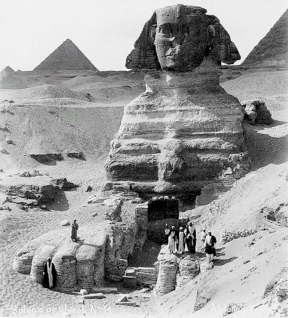

 The great stone slab, firmly fixed against the breast of the Sphinx in front of the two paws, revealed and uncovered symbolical writings and warnings that can be interpreted in various ways, but certainly have significance to candidates of the mysteries and to the expectant observer. Whether that stone slab, huge in size and weight, is movable or not has not been determined, and whether there is a passageway behind it has not yet been conclusively determined.
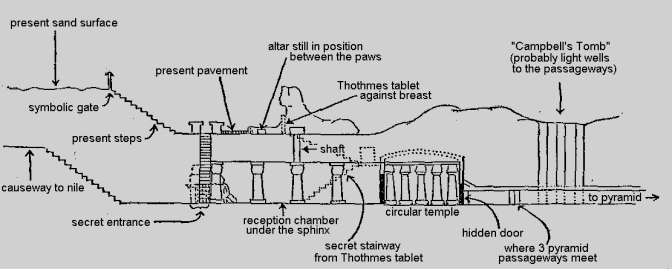 If the great gates which Heron invented would move some mysterious way through natural laws, there is no reason for us to doubt a huge stone gate moving in the similar fashion before the Sphinx in Egypt.
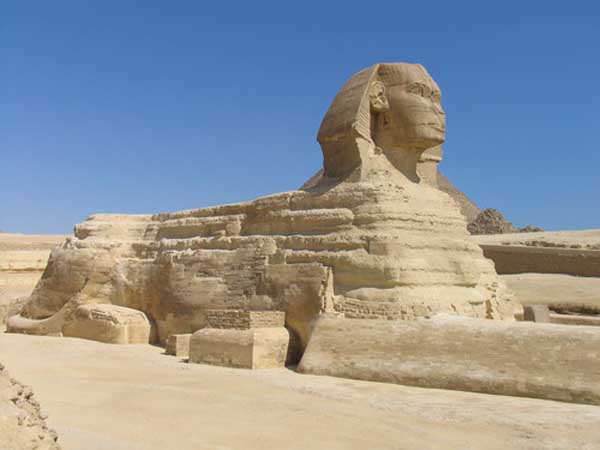 Facts
Facts

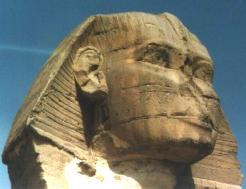
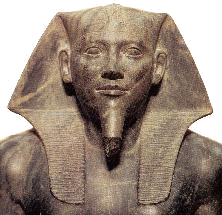
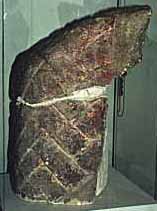 A piece of the original beard
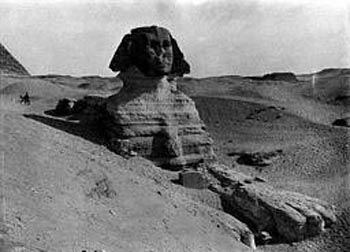
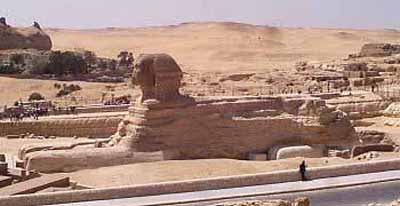
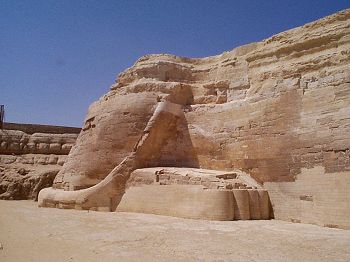
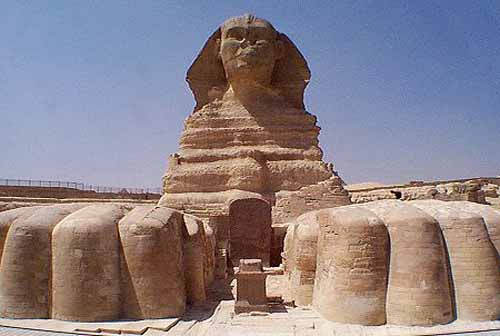
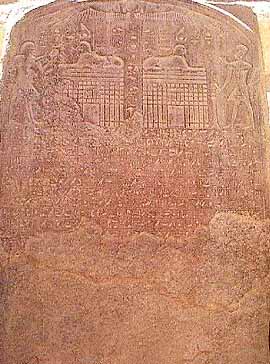
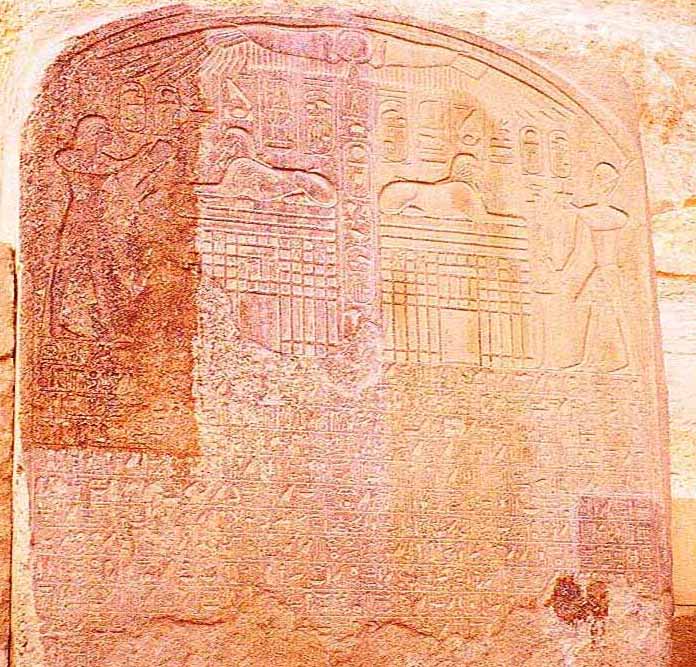

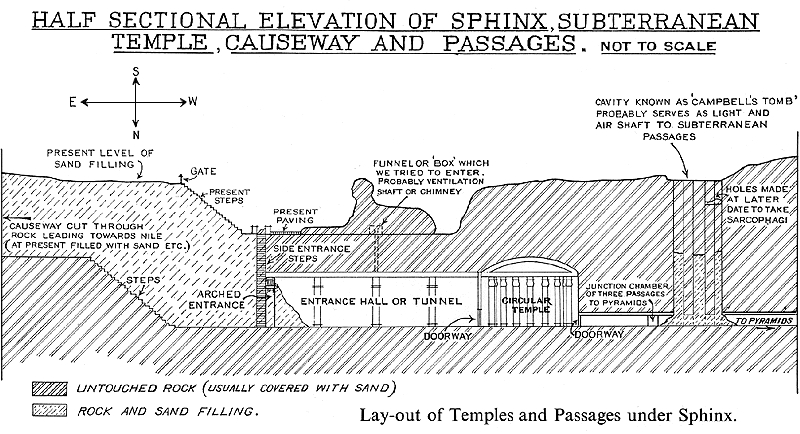
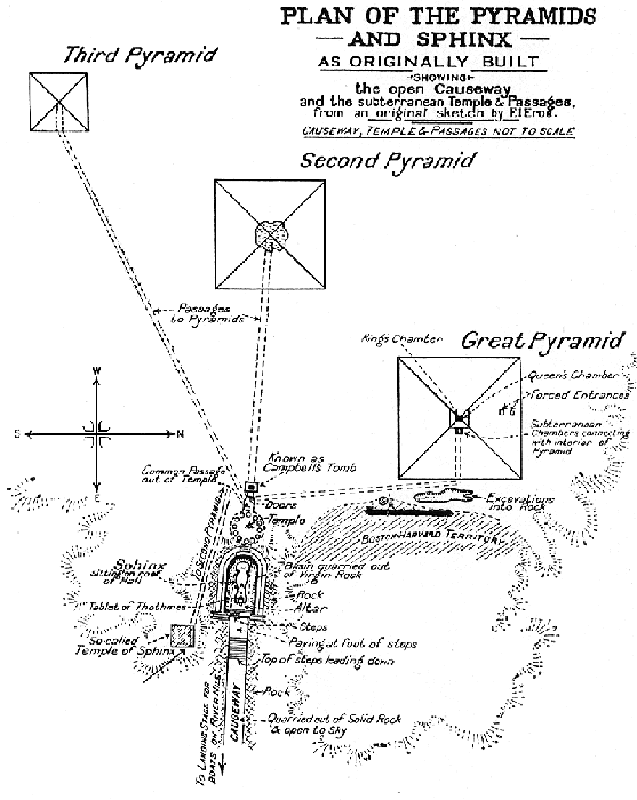

 Side doors lead to underground passageways.
 Underground passageways and chambers in front and rear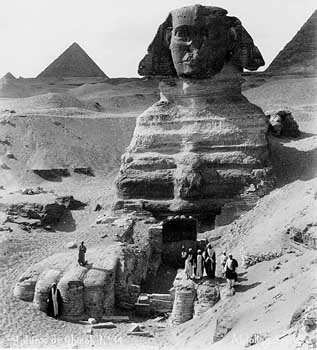


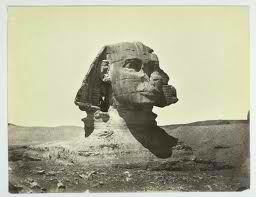
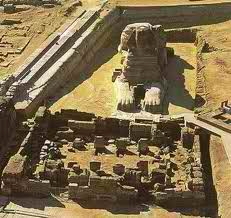


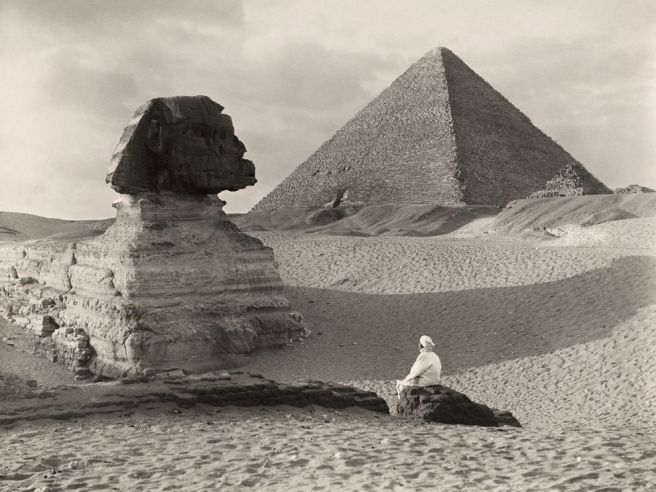


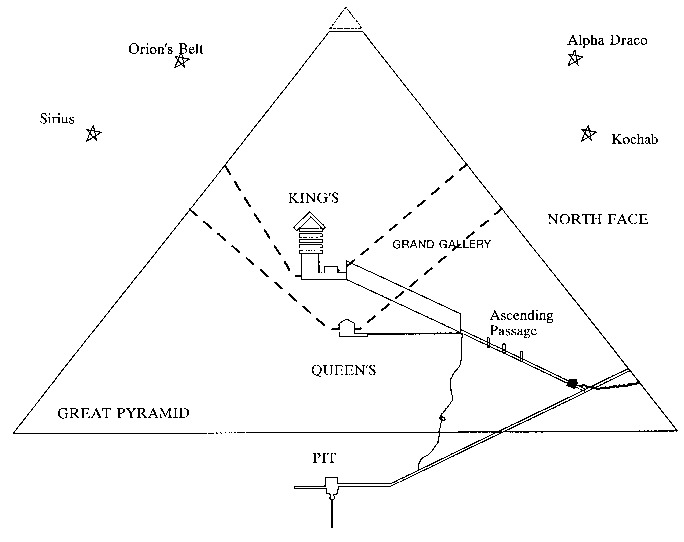
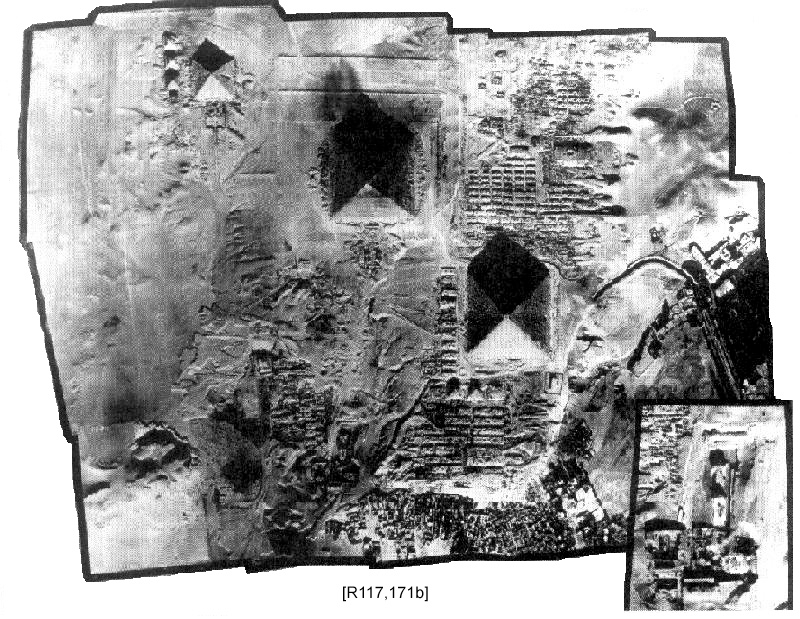
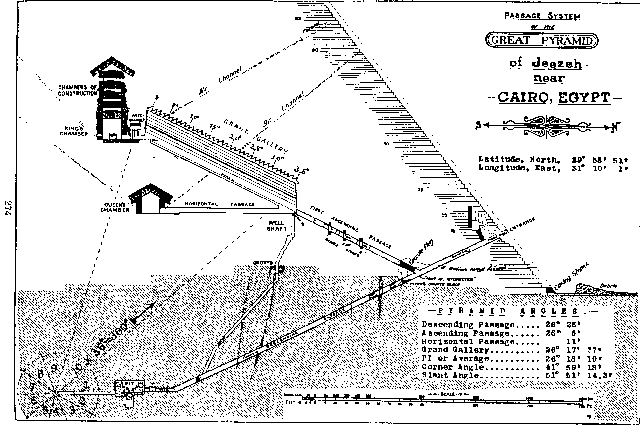
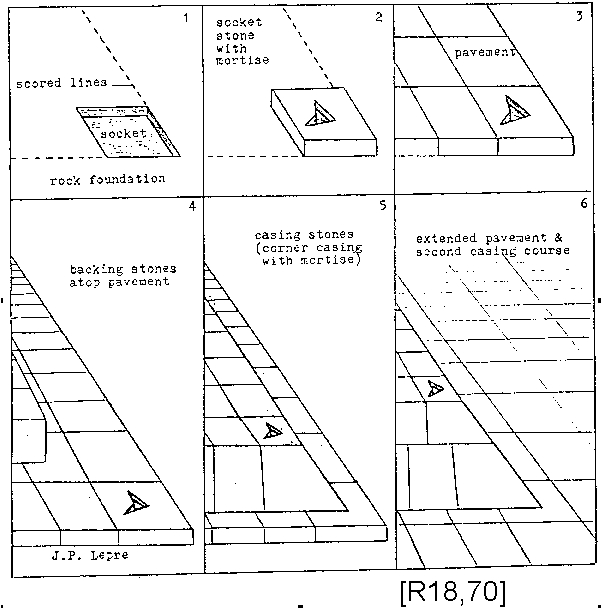
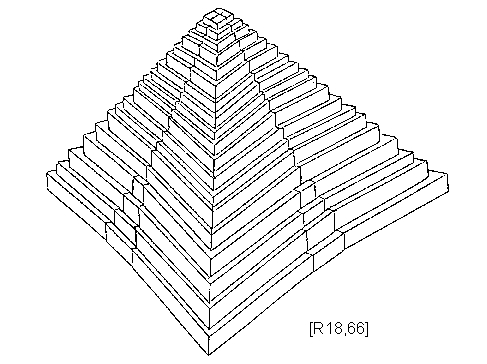
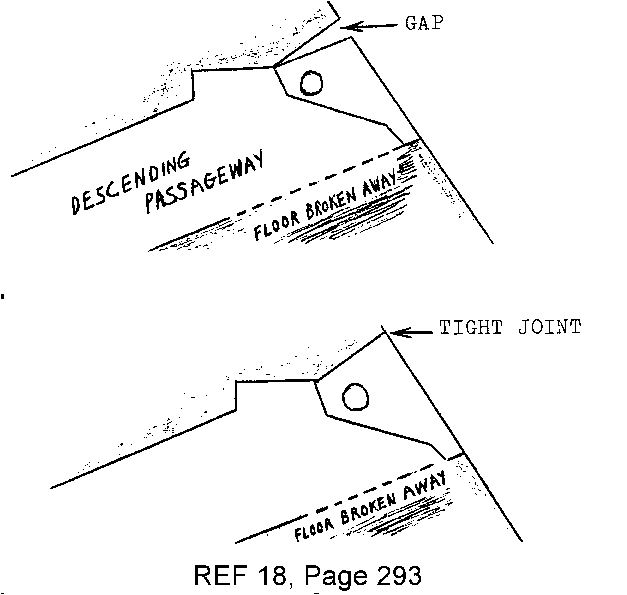
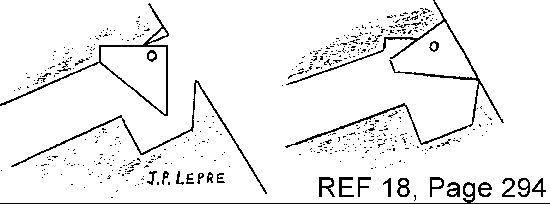
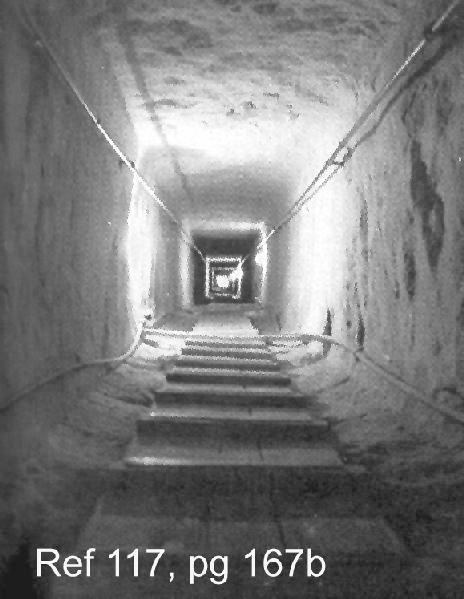


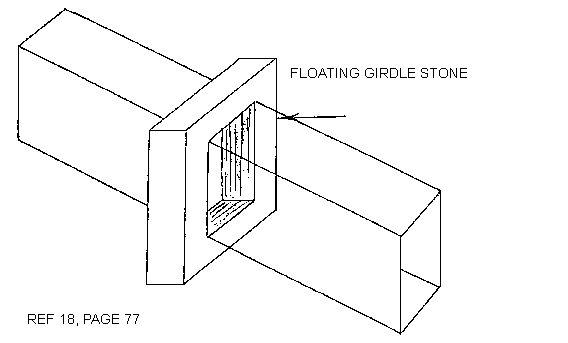
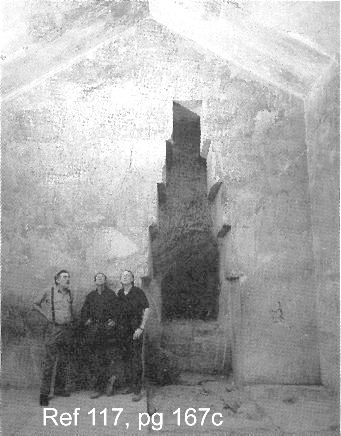
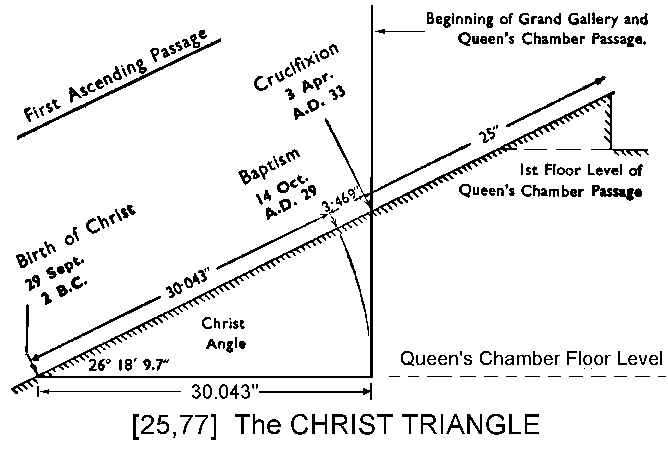
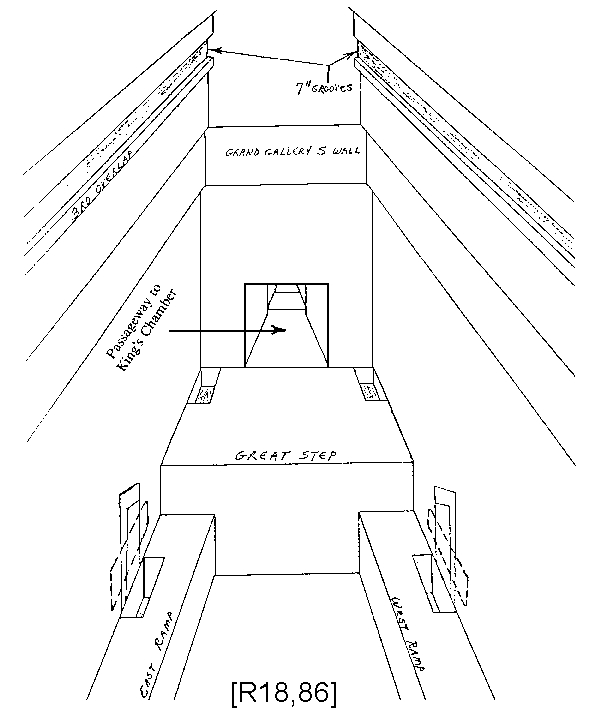

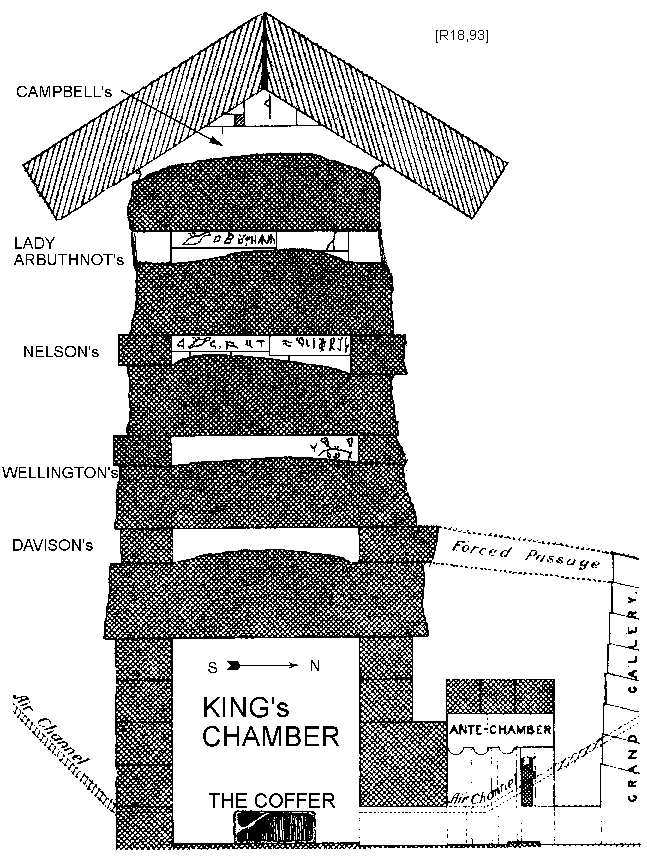
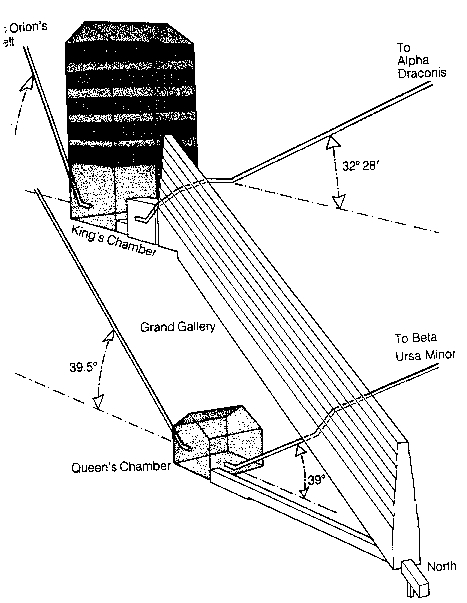
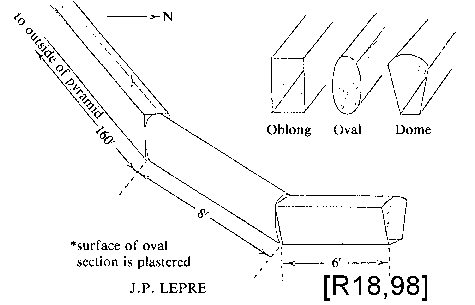

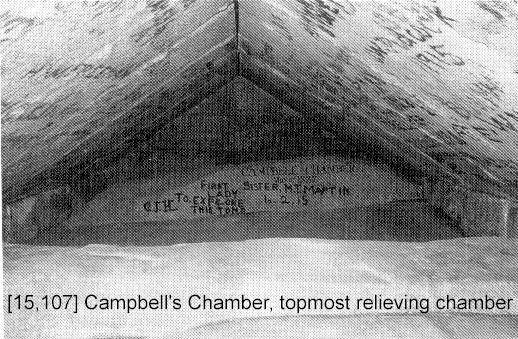

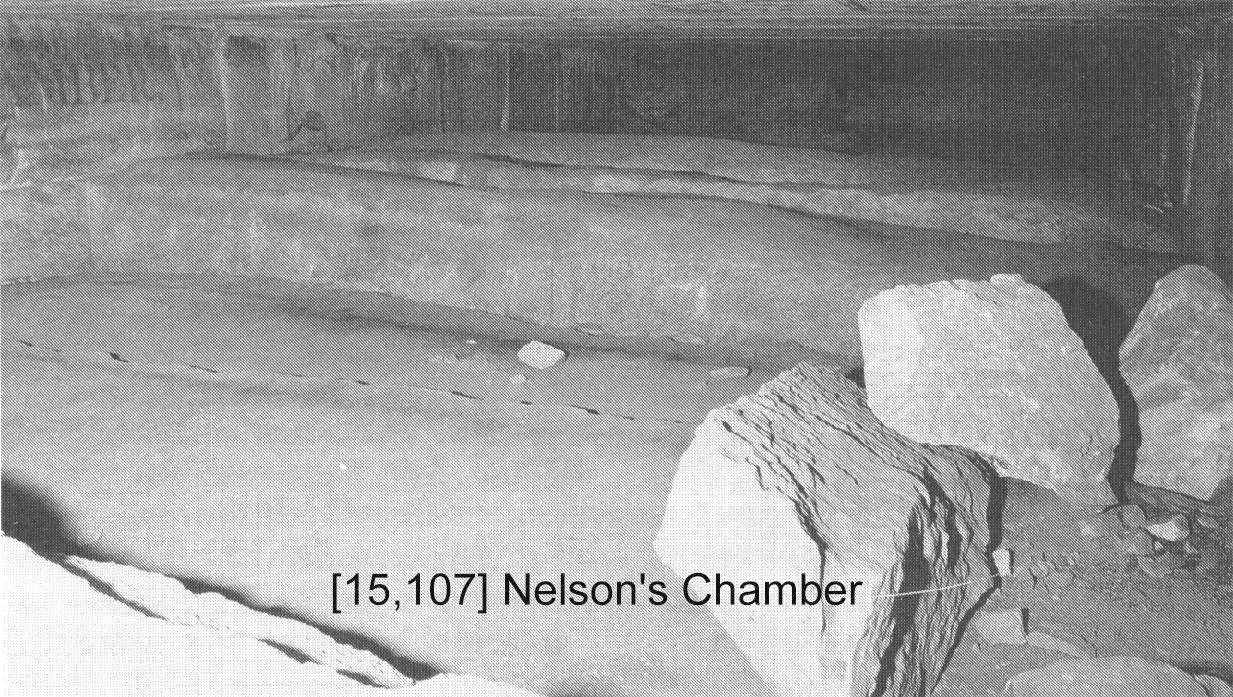

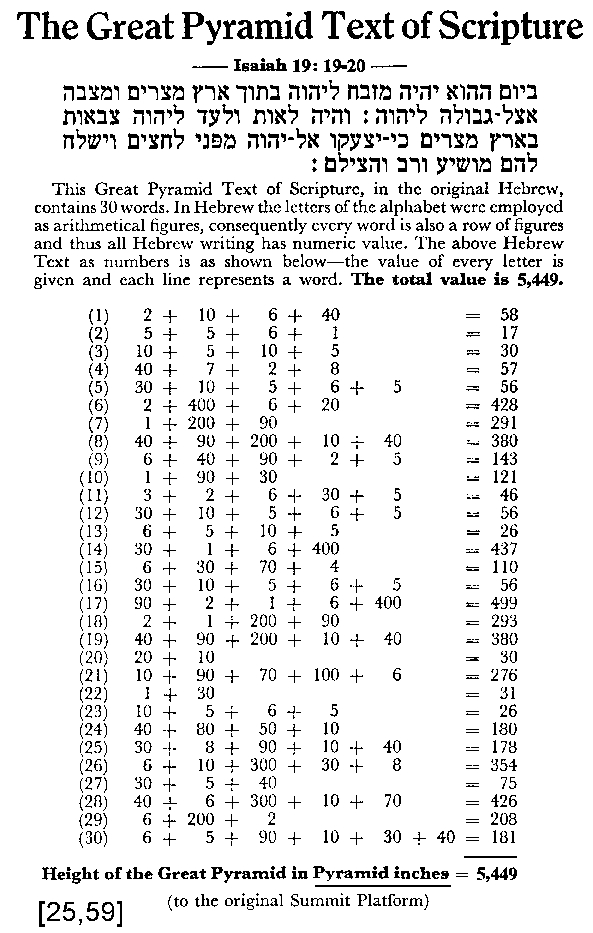


You must be logged in to post a comment.